From Monastery Cellars to Taproom Taps: How Romanian Brewers Are Reviving Recipes the World Forgot
If you've been following the American craft beer obsession — the hazy IPAs, the barrel-aged stouts, the hyper-local ingredient sourcing — then you already understand the impulse. Brewers want to make something real. Something with a story. What you probably haven't heard is that a small but seriously passionate community of Romanian brewers figured this out years ago, and they've been doing it with ingredients and techniques that most Western craft circles don't even know exist.
Welcome to Romania's craft beer revolution. It's been brewing — literally — for a while now, and it's starting to deserve some serious attention.
The Scene That Snuck Up on Everyone
Romania isn't the first country that comes to mind when Americans picture craft beer culture. Germany, Belgium, the Czech Republic — sure. But Romania? The country's commercial beer market has long been dominated by big industrial lagers, the kind you crack open at a summer festival and don't think twice about. For a long time, that was the whole picture.
Then, somewhere around the early 2010s, things started shifting. A handful of homebrewers and food-obsessed entrepreneurs started asking a different question: what did people in these mountains actually drink before the big breweries showed up? The answers they found sent them straight into the archives — and into the forests.
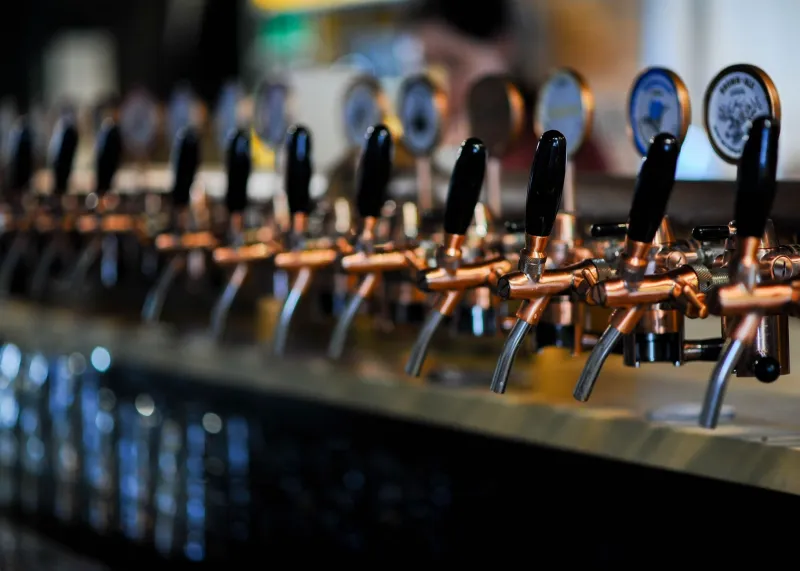
Today, cities like Cluj-Napoca, Brașov, and Bucharest have taprooms and microbreweries that wouldn't look out of place in Portland or Asheville. But the flavors coming out of those taps? That's where Romania breaks from the Western craft beer playbook entirely.
What's Actually Going Into the Bottle
Here's where it gets interesting for anyone who loves the "local ingredient" movement in American brewing. Romanian craft brewers are sourcing from a landscape that has barely been touched by industrial agriculture. That means access to things most brewers can only dream about.
Elderflower is a big one. It grows wild across Transylvania and has been used in Romanian folk medicine and cooking for centuries. A few brewers have started incorporating elderflower into wheat ales and saisons, and the result is floral in a way that feels ancient — not perfumed or trendy, but genuinely rooted in place.
Juniper is another. Before hops became the dominant bittering agent in European brewing, many cultures used juniper berries to balance sweetness and add preservation. Romanian brewers have started reviving this pre-hop tradition, producing ales with a piney, slightly resinous character that tastes like nothing you'd find on a standard American tap list.
And then there's the grain question. Several producers have started working with heritage barley varieties that were nearly wiped out by the industrialization of Romanian agriculture during the communist era. These old-school grains have lower yields but dramatically more complex flavor profiles — nuttier, earthier, with a depth that modern barley strains simply can't replicate.
The Monastery Connection
One of the most fascinating threads in Romania's craft beer revival is the monastic one. Romanian Orthodox monasteries have a long history of brewing — not unlike the Trappist tradition in Belgium, though far less documented and far less exported. Monks brewed for sustenance, for trade, and for feast days, using whatever herbs and botanicals grew nearby.
Some contemporary Romanian brewers have been quietly digging through old monastery records and oral histories to reconstruct these recipes. It's painstaking work — a lot of what survived is fragmentary, more suggestion than formula — but the results have been striking. One approach gaining traction involves brewing with linden blossom (tei in Romanian), a tree that holds deep cultural significance across the Carpathian region and produces a honey-like floral aroma that transforms a simple ale into something almost meditative.
None of this is marketing gimmick. These brewers are genuinely engaged with the history. They're collaborating with ethnographers, visiting monasteries, and in some cases working directly with the communities that kept these traditions alive.
Why This Matters to the American Craft Beer Fan
If you're the kind of person who seeks out small-batch releases, who reads the tasting notes on a can, who appreciates when a brewer can tell you exactly which farm grew their hops — Romania's emerging scene is made for you. It's doing everything American craft culture aspires to, but from a starting point that hasn't been strip-mined by trend cycles yet.
There's also a terroir angle here that's genuinely compelling. The Carpathians are one of the last large wilderness areas in Europe. The biodiversity is extraordinary. When a Romanian brewer talks about "local ingredients," they're not talking about sourcing from 50 miles away in a heavily farmed region — they're often talking about wild-harvested botanicals from mountain ecosystems that have been largely untouched for generations. That's a flavor story with real depth.
The Challenges Are Real, Too
None of this is happening without friction. Distribution infrastructure in Romania is still catching up to the quality of what's being produced. Export is minimal — finding Romanian craft beer in the US right now is genuinely difficult, though not impossible if you know where to look. And the economic pressures on small producers are significant; Romania's cost of living may be lower than Western Europe, but margins on craft beer are thin everywhere.
There's also the challenge of education. Convincing a market that's grown up on cheap industrial lager to pay a premium for a juniper-spiced heritage ale requires patience and storytelling. Romanian craft brewers are doing both, slowly building a domestic audience while keeping one eye on the international stage.
Worth Watching
The Romanian craft beer story is early enough that there's still something exciting about it — the sense that you're catching something before it blows up. For American beer fans who feel like the domestic craft scene has gotten a little too familiar, a little too predictable, this is the kind of thing worth paying attention to.
These are brewers who aren't chasing trends. They're chasing something older and stranger and more interesting: the specific taste of a landscape, filtered through centuries of tradition, and poured into a glass that's very much of the present moment.
That's a story worth raising a pint to.