Ancient Grapes, Zero Hype: Romania's Wine Country Is Ready for Its Close-Up
Ancient Grapes, Zero Hype: Romania's Wine Country Is Ready for Its Close-Up
Let's play a quick game. Name a wine region. You probably said Napa. Maybe Bordeaux, Tuscany, or the Willamette Valley if you're feeling fancy. Here's one you almost certainly didn't say: Cotnari. Or Dealu Mare. Or the rolling vineyards of the Moldavian plateau, where people have been fermenting grapes since roughly 4000 BCE and where some of the most interesting bottles in the world are currently being produced for prices that would make a Sonoma importer weep.
Romanian wine is, without much exaggeration, one of the great undiscovered stories in American drinking culture. And the reason it's undiscovered has less to do with quality and more to do with a 45-year detour through communist central planning that nearly erased the whole tradition. Nearly — but not quite.
Six Thousand Years Is Not a Typo
When we say Romania is one of the oldest wine-producing regions on earth, we're not doing the thing where a marketing team stretches a fun fact into a headline. Archaeological evidence of grape cultivation in what is now Romanian territory dates back to the Neolithic period. The Dacians — the pre-Roman civilization that forms the backbone of Romanian cultural identity — were serious viticulturalists. So serious, in fact, that their wine culture caught the attention of the Greeks and Romans, who traded for it and eventually wrote about it.
The region that is now the Cotnari appellation in northeastern Moldova has been producing wine continuously for so long that medieval chronicles mention it by name. Stephen the Great, the 15th-century Moldavian ruler who spent most of his reign fighting off the Ottoman Empire and is still basically the national hero of both Romania and Moldova, reportedly celebrated his military victories with Cotnari wine. The man had taste.
This is the lineage we're talking about. Not "established in 1982 by a tech entrepreneur with a passion for the terroir." Six thousand years of accumulated knowledge about what grows where and why.
The Grapes You've Never Heard Of (And Should)
Here's where it gets genuinely exciting for the wine curious. Romania has a collection of indigenous grape varietals that exist nowhere else on earth, and they are interesting in ways that the international varieties — your Cabernets, your Chardonnays — simply can't replicate.
Fetească Neagră ("Black Maiden") is the one that most often converts skeptics. It produces a red wine with dark fruit, a distinctive earthy quality, and tannins that are present but not aggressive. Think of it as somewhere in the neighborhood of a Malbec and a Syrah, but with its own personality that doesn't quite map onto anything you've had before. That's not a flaw. That's the whole appeal.
Tămâioasă Românească ("Romanian Frankincense") is a white grape — the name comes from its intensely aromatic character, a kind of floral, honeyed quality that can go dry or sweet depending on how it's made. At its best, it's one of the more memorable white wine experiences you can have. At its worst, it's still pretty great.
Then there's Fetească Albă, Grasă de Cotnari, and Băbească Neagră, each with its own regional character and each representing a living piece of viticultural history that survived against some pretty significant odds.
What Communism Did to Romanian Wine
The short version is: a lot of damage, incompletely repaired.
When the communist regime consolidated agriculture in the 1950s and 60s, Romanian vineyards were collectivized like everything else. The focus shifted from quality to volume — Romania became a bulk wine exporter, producing enormous quantities of cheap wine for the Soviet bloc market. Ancient varietals that didn't yield enough per acre were ripped out and replaced with higher-volume international grapes. Generational knowledge about specific plots, specific clones, and specific techniques was disrupted or lost entirely.
By the time communism collapsed in 1989, Romanian wine had a reputation problem. The bottles that had made it to Western markets — and not many had — were often poor quality, relics of the bulk-production era. The association stuck.
What's happened since then is a genuine revival story, and it's one that's still unfolding.
The New Guard
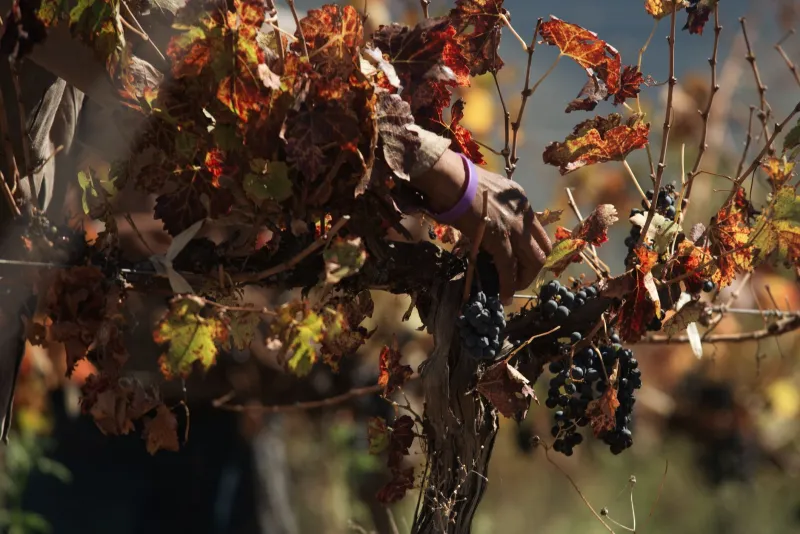
Starting in the late 1990s and accelerating through the 2000s, a new generation of Romanian winemakers began doing the hard work of rebuilding. Some came from winemaking families and were reclaiming traditions their parents had been forced to abandon. Others were younger entrepreneurs who had studied viticulture abroad — in France, Germany, Australia — and came home with both technical training and a renewed appreciation for what Romania's indigenous grapes could actually do.
Regions like Dealu Mare ("Big Hill") in Wallachia and the Cotnari and Huși appellations in Moldova have seen serious investment in both vineyard management and winery infrastructure. The Transylvanian Plateau, with its cooler climate and higher altitude, has become particularly exciting for aromatic whites and lighter reds that wine writers are starting to compare favorably to Austrian and Alsatian styles.
Small producers like Cramele Recaș, Davino, and SERVE have been building international reputations, picking up medals at European competitions and slowly, slowly making inroads into the American import market. The distribution network is still thin — finding Romanian wine in the US requires some effort — but it's getting easier, particularly in cities with large Eastern European communities and in wine-focused restaurants whose sommeliers have done the homework.
Why Right Now Is the Time to Pay Attention
Here's the practical case for the American wine drinker: Romanian wine is where a lot of other now-fashionable regions were about 15 years ago. Remember when nobody in the US was drinking Greek wine? Or when Spanish wines outside of Rioja were considered a curiosity? The pattern repeats — a region with genuine quality and deep history gets "discovered" by a small group of enthusiasts, the word spreads, prices go up, and eventually it's on every trendy restaurant list.
Romanian wine is early in that cycle. The quality is there. The story is extraordinary — six millennia of viticulture, indigenous varietals you can't get anywhere else, a recovery narrative from communist-era destruction that's still being written. The prices are still remarkably reasonable.
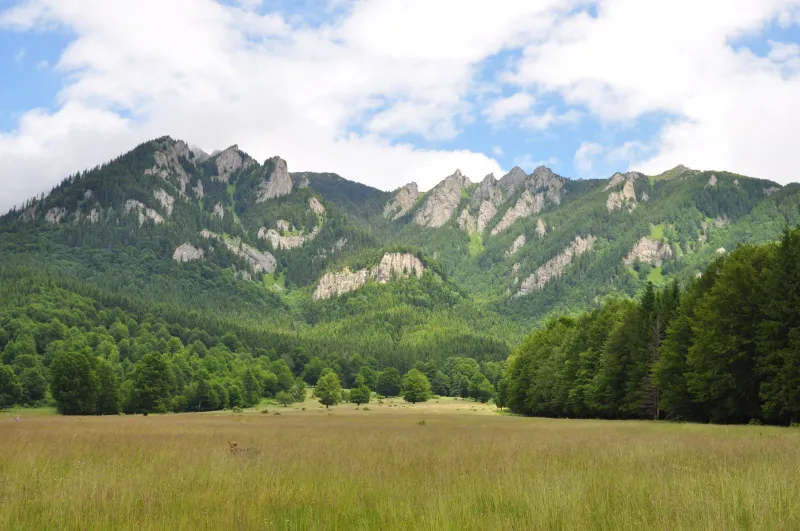
The Carpathians have been keeping secrets for a long time. This one, at least, is delicious.