Longing as a Language: The Ancient Romanian Song Form That Hits Like the Blues — But Deeper
There's a Word for This Feeling. It's Romanian.
You know the feeling. It's not quite sadness, not quite nostalgia. It's something closer to the ache of distance — from a place, from a person, from a version of yourself that no longer exists. The Portuguese have saudade for it. The Welsh have hiraeth. Blues musicians built an entire American art form around the edges of it.
Romanians have the doina. And depending on who you ask, they got there first.
The doina (pronounced roughly DOY-nah) is an ancient form of Romanian vocal folk music — melodically fluid, rhythmically free, and emotionally unsparing in a way that tends to catch first-time listeners off guard. It's been recognized by UNESCO as an Intangible Cultural Heritage of Humanity. It has influenced Romanian classical composers, shaped the country's modern folk revival, and quietly accumulated a small but devoted following among world-music listeners in the United States who stumbled across it looking for something else entirely.
If you've never heard it, that's about to change. And if you have heard it, you already know why this article exists.
Shepherd Songs and Mountain Silences
The doina's origins are genuinely ancient, traceable at minimum to the pastoral traditions of Carpathian shepherds who spent months at a time in high-altitude isolation with their flocks. The conditions were, by any modern standard, extreme: weeks without significant human contact, landscapes of enormous scale, and a relationship with solitude that most contemporary people simply don't have access to.
What came out of that context wasn't entertainment. It was expression in the most literal sense — a way of externalizing interior states that had nowhere else to go. The melodic structure of early doina reflects this: it's not built around regular rhythm or predictable phrase lengths the way Western folk music tends to be. It flows and stretches according to the emotional logic of the moment, which is part of why it's so difficult to categorize and so immediately affecting.
The themes that emerged from those Carpathian hillsides — longing for home, grief over separation, the particular melancholy of wide-open natural spaces — became the genre's permanent DNA. Even as the doina moved down from the mountains and into villages, towns, and eventually cities, those core preoccupations didn't shift. They just found new contexts.
The Many Faces of One Song
One of the things that surprises people when they first start exploring the doina is how much variety exists within what sounds like a single emotional register. There are doinas of exile, sung from the perspective of someone far from home — the Romanian diaspora, historically substantial, gave this subcategory particular weight. There are doinas of love and loss, doinas of social protest (the haiduci tradition, those Carpathian outlaws this very site takes its name from, inspired their own branch of the form), and doinas of pure landscape — songs that seem to be about a hillside or a river in the same way a painting is about its subject.
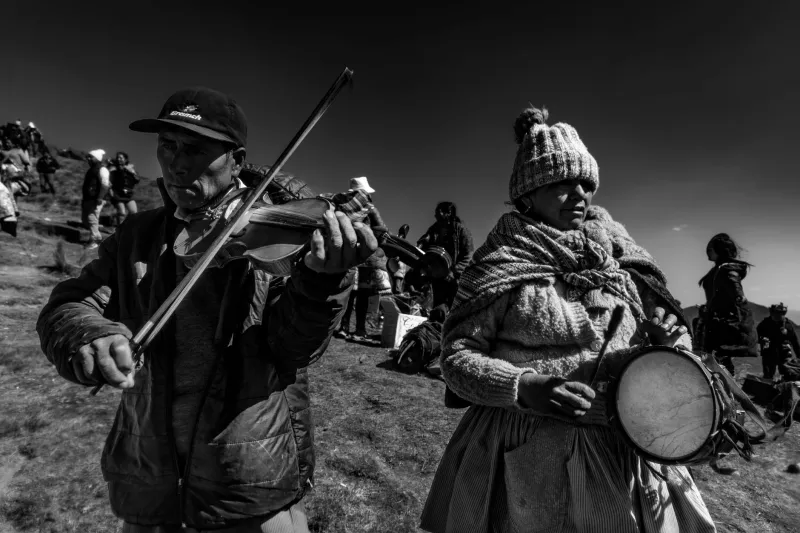
Regional variation is significant here too. Moldavian doina tends toward a particular plaintive quality, often featuring violin accompaniment that seems to be having its own parallel conversation with the vocalist. Transylvanian versions can be more ornamented, more rhythmically assertive. Oltenian doina sometimes carries a harder edge, less resigned than its northern counterparts.
Whatever the regional flavor, the core experience remains consistent: you are listening to someone process something too large for ordinary speech.
The UNESCO Recognition and What It Means
In 2009, UNESCO added the doina to its Representative List of the Intangible Cultural Heritage of Humanity. This is significant not just as an honor but as an acknowledgment of vulnerability. Traditions get protected status when they're at genuine risk — when the transmission mechanisms that kept them alive (in this case, oral tradition, community gathering, the particular social fabric of rural Romanian life) have been disrupted enough that the form might not survive without intentional preservation effort.
The disruptions in the doina's case are real and well-documented: forced collectivization under communism, which devastated rural communities; urbanization that pulled younger generations away from the contexts where the music was naturally learned; and the general pressure of globalized pop culture, which has a way of flattening regional distinctiveness wherever it lands.
What the recognition also did, usefully, was generate documentation and international attention. Ethnomusicologists who'd been working in Romanian villages for decades suddenly had a larger audience. Recordings that had existed only in Romanian archives became more accessible. And a form that had been largely invisible to Western listeners started appearing on world-music playlists alongside fado and flamenco — genres that American audiences had already learned to love.
The American Discovery
The comparison to fado is one that comes up repeatedly among American listeners who've found their way to the doina, and it's instructive. Fado — Portuguese urban folk music built around saudade — had a genuine breakthrough moment in the US, partly through artists like Mariza and partly through the broader early-2000s world-music boom. It gave American listeners a template for appreciating music that foregrounds grief and longing as primary aesthetic values rather than problems to be resolved.
Doina offers something similar but rawer. Where fado developed in urban contexts and carries a certain formal elegance, doina retains the rougher edges of its mountain origins. The vocal technique is less polished by Western standards, more direct, more nakedly expressive. For listeners who respond to the emotional immediacy of early blues recordings — the Robert Johnson era, before the form got professionalized — the doina often lands with unexpected force.
Modern Romanian artists have helped bridge the gap. Maria Tănase, who recorded extensively in the mid-twentieth century and is sometimes called the Romanian Édith Piaf (though she'd probably have had opinions about that comparison), remains the most internationally recognized doina performer. More recently, artists like Grigore Leșe and younger folk-revival figures have kept the form vital while making it accessible to listeners who aren't starting from a place of cultural familiarity.
Why It Matters That You Know This Exists
There's a version of world-music appreciation that's essentially tourism — sampling unfamiliar sounds the way you'd try unfamiliar food, enjoyable but not particularly transformative. The doina tends to short-circuit that dynamic. It's not background music. It's not ambient. It demands something from you, and what it demands is that you sit with a particular quality of feeling long enough to recognize it in yourself.
For American listeners who've spent time with the blues, with fado, with flamenco, with gospel — with any music tradition built around the idea that some human experiences are too heavy for cheerful resolution — the doina isn't foreign. It's familiar in the way a distant relative is familiar. You share something you didn't know you shared.
That's worth knowing about. That's worth listening for.