When the Whole Village Showed Up to Help — And Nobody Called It a Party, But It Was
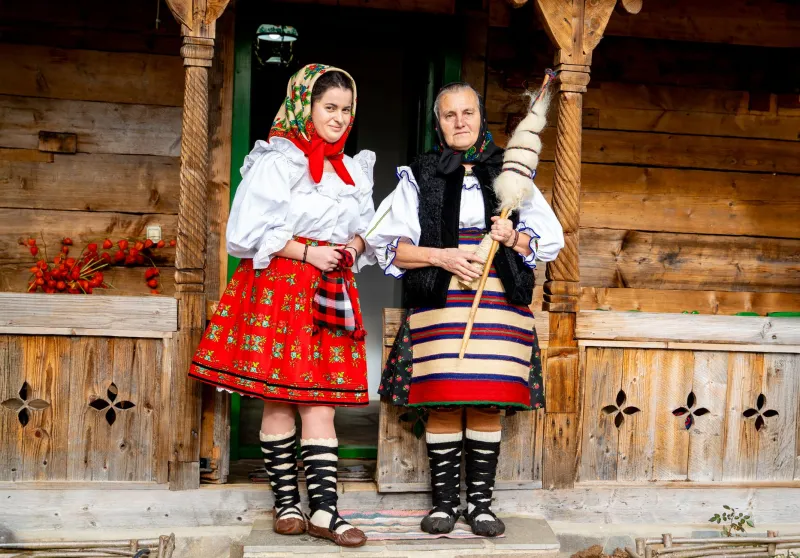
Picture this: it's late autumn somewhere in the Carpathian foothills, maybe a hundred and fifty years ago. A family has more corn to husk than they could ever get through alone before the frost sets in. So they don't try. Instead, word goes out — quietly, through the village grapevine — and by nightfall, the barn is packed. Neighbors are elbow-deep in dried husks. Someone's grandmother is singing. A fiddle has appeared from somewhere. Two teenagers who've been making eyes at each other across the church aisle for months are suddenly, conveniently, seated side by side.
This was clacă. And it was one of the most quietly brilliant social inventions the Carpathian world ever produced.
What Clacă Actually Was
At its core, clacă (pronounced roughly clah-tsuh) was a mutual aid system dressed up as a good time. When a task was too big for a single household — husking a season's worth of corn, shearing sheep, spinning wool, building a house, harvesting a field — the family hosting the work would invite the community. Neighbors came not because they were paid, but because that's simply what you did. The understanding was unspoken and ironclad: when your turn came, everyone would show up for you too.
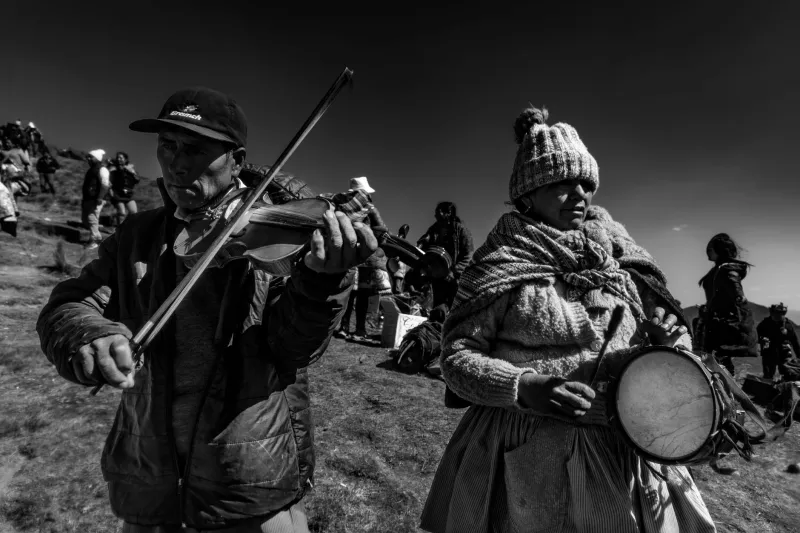
The host family's end of the deal? Feed everyone well. Provide music. Keep the atmosphere lively. In many villages, that meant a fiddler was hired specifically for the night, or the best singer in the community was given a place of honor. The work and the celebration weren't separate events — they happened simultaneously, one feeding the other.
Different seasons called for different kinds of clacă. Autumn was corn-husking time, when the finding of a red ear of corn was said to earn the finder a kiss — a rule that, unsurprisingly, generated enormous enthusiasm for the work. Winter evenings brought wool-spinning gatherings, quieter and more intimate, often held indoors by firelight. Spring and summer versions tackled field work and construction. Each had its own rhythms, its own songs, its own social choreography.
The Unwritten Rules That Made It Work
For all its festive energy, clacă ran on a surprisingly strict set of social codes — none of which were ever written down anywhere. Everyone understood them anyway.
You came when invited. Full stop. Skipping out without a genuine reason was a social infraction that people remembered. The labor was real — nobody showed up to stand around — but the expectation was also that the host would match the effort with generosity. A stingy spread of food, or a quiet night with no music, was considered a kind of insult. You were asking for people's time and muscle; the least you could do was make the evening worth their while.
And then there were the songs. Romanian folk music has always been deeply tied to the rhythms of physical work, and clacă was where that connection was most alive. Specific songs existed for specific tasks — husking songs, spinning songs, building songs — and they weren't just entertainment. They set the pace. They kept hands moving. They were, in the most literal sense, productivity tools that happened to be beautiful.
The Part Nobody Talks About: Clacă as Matchmaking Ground
Let's be honest — for a significant portion of the young people involved, the work was almost beside the point. Clacă was one of the few socially sanctioned spaces where unmarried men and women could spend extended time together, talk, laugh, and figure out who they liked. Supervised, yes, but loosely. The older generation was present but occupied. The fiddle was loud enough to cover a whispered conversation.
In villages where daily life kept young people largely separated by gender and role, clacă evenings were electric with possibility. Courtship happened in the margins of the corn pile. Relationships that would eventually become marriages often had their first real moments during a clacă night. The tradition knew this and accommodated it — the red corn ear kiss rule wasn't an accident. Somebody put that in there on purpose.
Sound Familiar? Sort Of.
Americans who know their history will recognize something here. Barn raisings — particularly common in Amish and early frontier communities — operated on a similar mutual-aid logic. Neighbors came together, the work got done faster than any one family could manage, and the gathering itself became a community ritual. The parallels are real.
But clacă had a few distinctly Carpathian flavors that set it apart. The musical element wasn't incidental — it was structural, woven into the work itself rather than saved for after. The courtship dimension was openly acknowledged rather than politely ignored. And the obligation ran deeper: this wasn't a favor you returned when convenient, but a social contract as binding as any legal agreement. Community wasn't something you opted into when the mood struck. It was the default operating system.
What Happened to It
Collectivization under communist rule in the mid-20th century did enormous damage to clacă as a living tradition. When the state reorganized agricultural labor into collective farms, the organic, neighbor-to-neighbor logic of clacă became both unnecessary and, in certain political climates, vaguely suspect. Unofficial gatherings that operated outside state structures weren't exactly encouraged.
Urbanization finished what collectivization started. When younger generations moved to cities, the village networks that made clacă possible simply didn't follow. You can't ask your apartment building to help you husk corn.
What remained, in many rural areas, were echoes — older neighbors who remembered, festivals that reconstructed the aesthetics without the underlying function, ethnographers documenting what had been lost.
Why It's Coming Back — Quietly
Here's the thing, though: across Romania right now, there are people actively trying to revive clacă. Not as a museum piece or a folk festival attraction, but as a functional practice. Community gardens organized on clacă principles. Rural restoration projects where volunteers tackle old buildings together. Young people who've returned to village life after years in Bucharest or abroad, specifically because they wanted something that felt more like this.
The timing makes a certain kind of sense. Romania, like the US, is grappling with what researchers have started calling a loneliness epidemic — the slow erosion of the kinds of casual, repeated, low-stakes social contact that used to happen naturally when people lived and worked in tighter proximity. We've optimized ourselves into isolation. Everything is efficient and individual and delivered to your door, and somehow that's left a lot of people feeling hollowed out.
Clacă was the opposite of that. It was inefficient by design — you could husk corn faster alone, or hire it out, but you'd miss the fiddle and the red ear and the conversation that went until midnight. The inefficiency was the point. The togetherness was the product.
What We Actually Lost
There's a question worth sitting with here, especially for American readers steeped in a culture that prizes self-sufficiency and individual hustle above almost everything else: what did we give up when we stopped working together?
Not just the productivity of many hands. The songs. The courtship rituals. The unspoken agreements that said I will show up for you because someday I will need you to show up for me. The sense that your neighbors weren't just people who happened to live nearby, but people you were genuinely in something with.
Clacă wasn't a wellness retreat or a team-building exercise. It was just how things got done — and the joy was a byproduct that nobody had to manufacture because it grew naturally out of people being present with each other, doing something real.
That might be the most Carpathian idea of all: that the best night of the year wasn't planned. It was worked for.