A Doorstep, a Song, and a Dictator: How Romania Kept Christmas in Its Throat
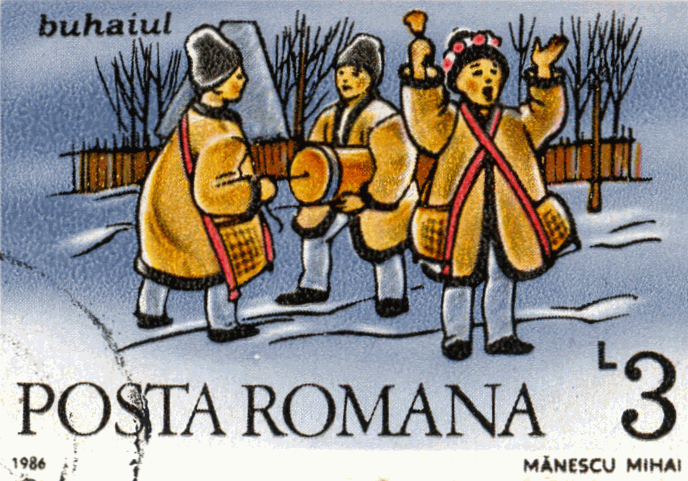
Photo: The original uploader was Alex:D at Romanian Wikipedia., Public domain, via Wikimedia Commons
Every December, in villages across Maramureș, Moldavia, and Transylvania, groups of singers still show up at doorways uninvited. They stamp snow off their boots, ask permission, and launch into a colindă—a Romanian Christmas carol that is part lullaby, part blessing, part oral history. The hosts open the door. The singers keep going. Someone brings out țuică. Someone else starts crying. It looks like a scene that has been happening forever, and in some ways it has.
But the doorway carol has also been a quiet act of defiance. During Romania's communist period, Christmas was not simply a private holiday that the state ignored. It was a problem. Religion was restricted, public religious expression was controlled, and the security apparatus had a long memory. Carols were not always illegal in the blunt sense. The pressure was more bureaucratic and more sinister: songs were discouraged, gatherings were monitored, and the state tried to replace religious winter traditions with secular celebrations of the New Year and the winter solstice.
Older Than the State, Older Than the Church Calendar
Colinde are not just Christian devotional songs, although many are. Their roots run back to pre-Christian winter rituals—songs for fertility, protection, and the return of light—that were later layered with Christian imagery. That is why some colinde feel less like hymns and more like incantations. They ask for health, good harvests, safe animals, and harmony in the house. They address the family, the threshold, the animals, the fields.
That older layer is part of why the communist state found them suspicious. A carol is not just a song. It is a social event. It requires neighbors to open doors, to recognize each other, to hand over food and drink and money, and to participate in a ritual that the state did not control. You can regulate a church. It is harder to regulate a chain of doorways.
The Dictator's Problem With a Chorus
Under Nicolae Ceaușescu, Romania's cultural policy tightened in the 1970s and 1980s. The regime promoted a national identity that was carefully curated: folk costumes yes, folk religion no. Christmas was allowed to exist in some forms, but the religious content was blurred. Carols were sometimes performed on stage as folklore, stripped of their devotional meaning. In homes and villages, people sang them anyway.
The stories from that period are not all dramatic. Sometimes it was a family singing quietly with the curtains drawn. Sometimes it was a group of young people going door to door and being told to move along. Sometimes it was a grandmother teaching a child a colindă because she did not trust the state to keep it. The secrecy was not always heroic. It was often just stubborn.
That stubbornness matters. A regime can ban a public procession, but it cannot easily ban a grandmother. It can print a secular holiday program, but it cannot stop a neighbor from opening the door.
After 1989, the Doors Opened Again
The revolution of December 1989 ended Ceaușescu's regime. In the years that followed, Christmas became a public holiday again, and the old carols came back into the open. Some returned exactly as they had been sung. Others were cleaned up, arranged for choirs, and put on concert stages. Both versions are real. The village version and the concert version are not enemies. They are just different rooms in the same house.
In 2026, colinde are still a living tradition. In Romania, you will hear them in churches, schools, and village squares. You will also hear them in the diaspora—in Chicago, Cleveland, Los Angeles, and any other city with a Romanian community. A group of singers shows up at a door, the host pretends to be surprised, and the old words come out. The accent may be different. The snow may be absent. The threshold is still there.
What the Carols Carry
For an American audience, the closest comparison might be to spirituals or protest songs that survived because they were portable. A colindă does not need a building. It needs a voice and a listener. That is why it survived a state that had files on everyone.
The carols also carry a different idea of Christmas. The American version is largely about consumption: gifts, decorations, travel, the perfect table. The colindă version is about presence. You go to the door. You are received. You sing a blessing. You are fed. You leave. The transaction is not money. It is recognition.
That is why the carols outlasted the dictator. They were never just entertainment. They were a way of saying: we are still here, and we are still each other's neighbors. In 2026, that is still the point.