The Mountain Reads Back: How Romanian Shepherds Still Navigate Terrain That Breaks GPS
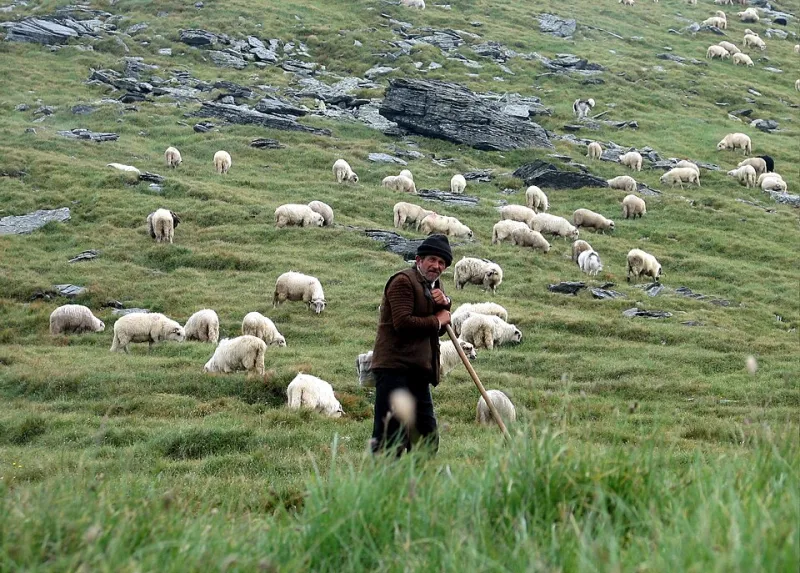
Photo: friend of Darwinek, CC BY-SA 3.0, via Wikimedia Commons
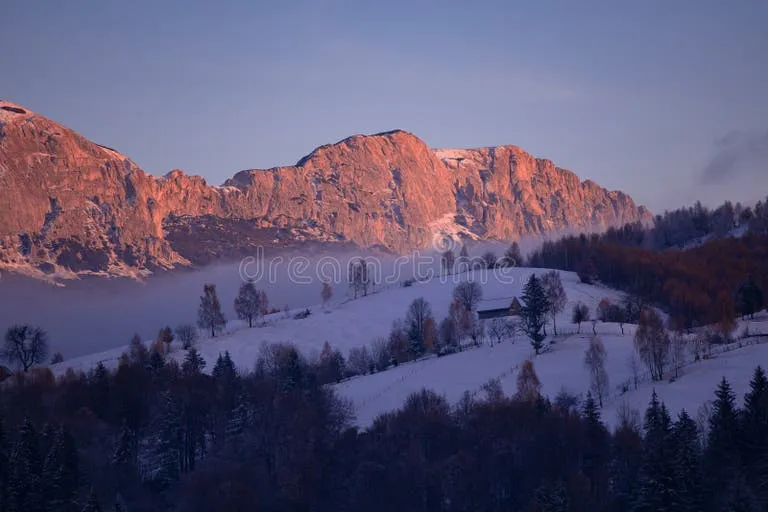
Your phone dies somewhere above 6,000 feet. The clouds have moved in fast — faster than the weather app predicted, because the weather app was calibrated for somewhere flat. The trail markers you were following are now behind a curtain of fog, and the wind has shifted in a way that makes your internal compass feel suddenly unreliable.
For a Carpathian shepherd, this is just Tuesday.
Not because shepherds are reckless or because mountain danger doesn't touch them, but because they are operating with a navigational system so deeply internalized that losing a phone signal is roughly as significant as losing a pencil. The mountain, to a trained shepherd's eye, is already covered in text. You just have to know the language.
A Literacy Built Over Millennia
The transhumance tradition — the seasonal movement of sheep herds between lowland winter pastures and high-altitude summer grazing — has been practiced in the Carpathians for at least two thousand years, possibly longer. That's roughly eighty generations of people learning the same mountains, passing observations forward, refining the knowledge through seasons of catastrophic weather, predator encounters, and the kind of hard lessons that don't repeat if you survive them.
What emerged isn't mysticism, exactly, though it can look like it from the outside. It's an accumulated ecological database, stored in memory and transmitted through apprenticeship. And it covers everything: weather, terrain, water, wildlife, vegetation, and the subtle behavioral signals of the animals in the shepherd's care.
The Romanian word cioban — shepherd — carries more weight in Carpathian culture than the English translation suggests. A cioban isn't just someone who watches sheep. They're someone who reads the landscape at a professional level, trained from childhood to notice things that most adults have been educated out of noticing.
Reading the Weather Before It Arrives
Modern meteorology is genuinely impressive. It's also built for population centers, calibrated to regional averages, and consistently humbled by microclimates — the hyperlocal weather variations that occur within specific valleys, above specific ridgelines, in the lee of specific peaks.
Carpathian shepherds navigate microclimates the way an experienced sailor reads a harbor. Some of the indicators are obvious once you know them: a particular ring around the moon, the way mist pools in a valley bottom at a specific hour, the direction from which the swallows are flying. Others are counterintuitive — the sudden silence of birds in a forest that should be active, or the way a herd starts moving uphill in late afternoon despite having found good grass, an animal instinct that often precedes a rapid pressure drop.
The sheep themselves function as instruments. Their behavior encodes information about approaching weather, nearby predators, and changes in the pasture that a human observer standing upright simply can't detect at ground level. A shepherd who learns to read their flock is, in effect, running a distributed sensor network with several hundred nodes.
One of the more remarkable examples: experienced cioban can often predict rain 12 to 24 hours out by observing how their animals position themselves during rest. Sheep that cluster tightly with their backs to a specific direction are responding to barometric changes their bodies detect before any visible weather sign appears. It sounds like folk superstition. It's actually applied biometeorology.
Terrain as Text
Navigation in the high Carpathians — the Bucegi massif, the Făgăraș range, the Apuseni mountains — relies less on landmarks in the conventional sense and more on what might be called relational reading. A landmark is a fixed object you recognize. Relational reading is understanding how objects relate to each other and to you, and how those relationships shift as you move.
Specific rock formations, the angle of certain slopes, the way a stream bends before it drops — these form a web of orientation points that experienced shepherds can use even in low visibility. They also use sound: the acoustic properties of certain valleys mean that a shepherd who knows the terrain can locate themselves relative to known features by listening to how wind, water, and even their own voice echo back.
There's a Romanian concept — urma — that translates roughly as trace or track, but carries connotations of path, history, and presence all at once. Following urma in the shepherd's sense isn't just tracking an animal. It's reading the cumulative passage of living things through a landscape, understanding that the mountain retains evidence of everything that has moved through it. The faint depression in the grass where a herd passed three days ago. The disturbed lichen on a rock that marks a bear's regular route. The way a particular tree leans, shaped by decades of prevailing wind, pointing toward a valley you can use as shelter.
What We Traded Away
Here's an uncomfortable thought for anyone who's ever felt proud of navigating a new city using Google Maps: the navigational intelligence the Carpathian shepherd deploys represents a form of spatial cognition that neuroscientists have confirmed is use-it-or-lose-it. Populations that rely heavily on GPS assistance show measurable reductions in hippocampal activity related to spatial navigation. We are, in a very literal neurological sense, outsourcing a cognitive capacity that took millions of years to develop.
This isn't a screed against technology. It's an observation about what gets lost when a skill stops being practiced across generations. The cioban tradition represents an intact transmission chain — knowledge moving from elder to apprentice, season by season, mountain by mountain — that most of Western culture has already broken.
Environmental educators in the US have started rediscovering pieces of this — sit-spot practices, tracking traditions borrowed from Indigenous knowledge systems, wilderness survival curricula that teach students to read weather and terrain. All of it is valuable. None of it approaches the density and integration of what a shepherd trained from childhood in the Carpathian tradition carries in their head.
The Apprenticeship That Still Exists
The remarkable thing is that this knowledge system hasn't entirely disappeared. There are still active transhumance routes in Romania. There are still ciobani who learned from their fathers and grandfathers, who can look at a cloud formation over the Bucegi and tell you with reasonable confidence what the afternoon holds.
Some of them are in their seventies. Some are in their thirties. The transmission is thinner than it once was — fewer young people are choosing shepherd life, and the economic pressures on traditional pastoral agriculture are real. But the knowledge persists, carried in the bodies and memories of people who grew up reading a mountain the way you learned to read a page.
When the phone dies above 6,000 feet and the fog comes in, that knowledge is worth more than any app ever written. The mountain has always been readable. We just stopped teaching people how to read it.