Dor: The Romanian Emotion English Has No Room For
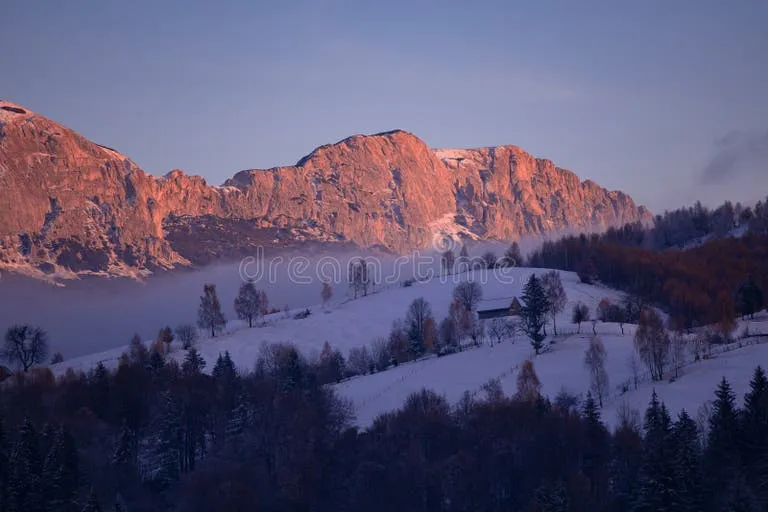
Photo: Romanian village misty mountains sunset melancholy landscape, via thumbs.dreamstime.com
Let's start with a simple exercise. Think of the place where you feel most like yourself — not necessarily where you grew up, but wherever your nervous system settles into something close to peace. Now imagine being thousands of miles from it, knowing the return date is uncertain, and feeling that distance not as an abstract fact but as a physical pressure in your chest.
In English, the closest word available is homesick, which is fine as far as it goes. But it doesn't go very far. It's a children's word, something you feel at summer camp. It implies that the cure is simply going home, and that once you do, the feeling resolves.
Romanian has a different word: dor. And the reason it matters — to linguists, to diaspora communities, to anyone trying to understand what gets lost in cultural translation — is that dor doesn't work like homesickness at all.
What Dor Actually Means (And Why That's Complicated)
Dor is one of those words that Romanian speakers will tell you, with a mixture of pride and mild frustration, simply cannot be translated. They're not being precious about it. The word genuinely covers semantic territory that English has divided among a dozen different terms, none of which quite capture the whole.
At its core, dor describes a longing — but longing for what varies enormously. You can feel dor for a person you love who's far away. You can feel dor for a place, for a season, for a time in your life that's passed. You can feel dor for something you've never had but somehow know is missing. There's a version of dor that functions almost like premonition — a yearning toward something that hasn't happened yet.
Crucially, dor is not purely painful. This is where English starts to fail most completely. Homesickness is an affliction. Dor is more like a bittersweet companion — something you carry rather than something that happens to you. Romanian speakers often describe it as a feeling they'd rather have than not have, because its presence confirms the depth of what they love. The absence of dor, in this framing, would mean an absence of connection.
There are echoes of this in other languages — the Portuguese saudade, the Welsh hiraeth, the Japanese mono no aware — and linguists have spent considerable time mapping the overlaps and divergences. What they share is a cultural willingness to name complex, mixed-valence emotional states that English tends to flatten or ignore.
Where Dor Lives in the Music
If you want to understand dor viscerally rather than intellectually, the fastest route is through doina — the ancient Romanian song form that predates any formal musical tradition and exists in a space somewhere between prayer, lament, and lyric poetry.
Doina is improvisational in structure, deeply personal in content, and almost impossible to describe to someone who hasn't heard it. The melody doesn't resolve the way Western music resolves. It circles, it delays, it lingers on notes past the point of comfort. The voice in a doina doesn't perform emotion — it inhabits it, often in a way that makes the distinction between singer and song feel irrelevant.
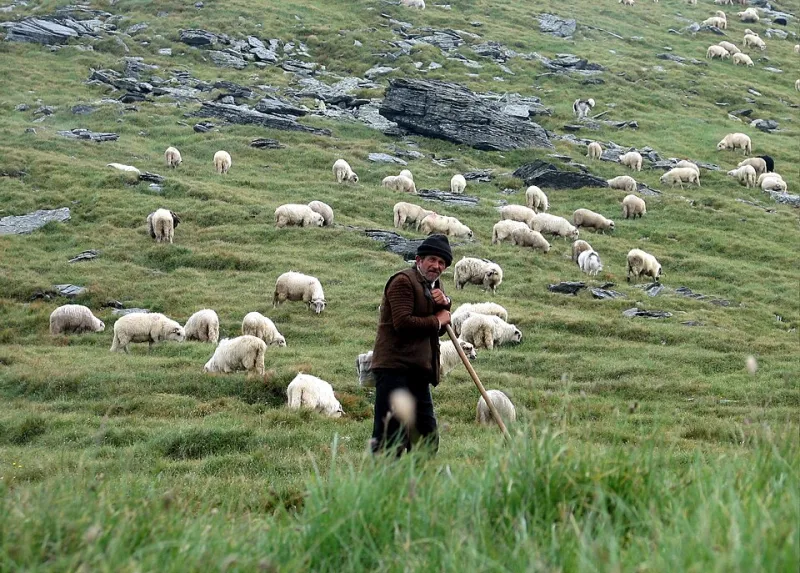
Dor is the emotional engine of doina. The greatest singers of the form — Maria Tănase, Grigore Leșe, and the anonymous voices preserved on early 20th-century recordings — are, in a sense, giving dor a body and letting it speak. The topics range: a shepherd missing his village, a young woman separated from her lover, an old man watching the mountains he'll never climb again. But the emotional texture underneath all of it is the same. It's dor.
For American audiences encountering doina for the first time, the closest reference point might be the blues — not in musical structure, but in emotional function. The blues also sits in that uncomfortable space between pain and beauty, also refuses to resolve into simple sadness, also emerged from communities that had very specific reasons to develop a sophisticated vocabulary for loss. The comparison isn't perfect, but it's a door worth opening.
The American Mobility Problem
Here's a cultural observation that might sting a little: the United States is one of the most geographically mobile societies in human history. Americans move for college, for jobs, for relationships, for climate, for cost of living. The average American moves 11 times in their lifetime. Moving is aspirational. Staying is sometimes coded as failure, or at least as lack of ambition.
That mobility is genuinely valuable in many ways. But it has a cost that American culture doesn't have good language for. When you've lived in seven cities by the time you're forty, when your childhood home has been sold and renovated beyond recognition, when the people you grew up with are scattered across four time zones — what do you call the feeling that produces?
You probably call it nothing, because English doesn't give you a word. You might describe yourself as feeling weird about going back home, or nostalgic, or just kind of off. None of those capture it. What you might actually be feeling is something close to dor — a layered attachment to places and people and versions of yourself that are gone or far away, felt not as simple sadness but as a complex, ongoing presence.
The absence of the word doesn't mean the absence of the feeling. It means the feeling goes unnamed, which means it goes unexamined, which means the culture doesn't develop tools for navigating it.
What Romanian Diaspora Carries
For Romanians living in the US — and there are roughly half a million of them, concentrated in cities like Chicago, Detroit, Los Angeles, and New York — dor is not a poetic concept. It's a daily reality, and one that doesn't simplify with time.
What diaspora communities often describe is a specific doubling: the dor for Romania felt while in America, and the dor for their American life felt when they return to Romania. Both are real. They don't cancel each other out. You can be homesick for two places simultaneously, and neither place is quite the home you remember, because the home you remember was partly made of who you were when you lived there.
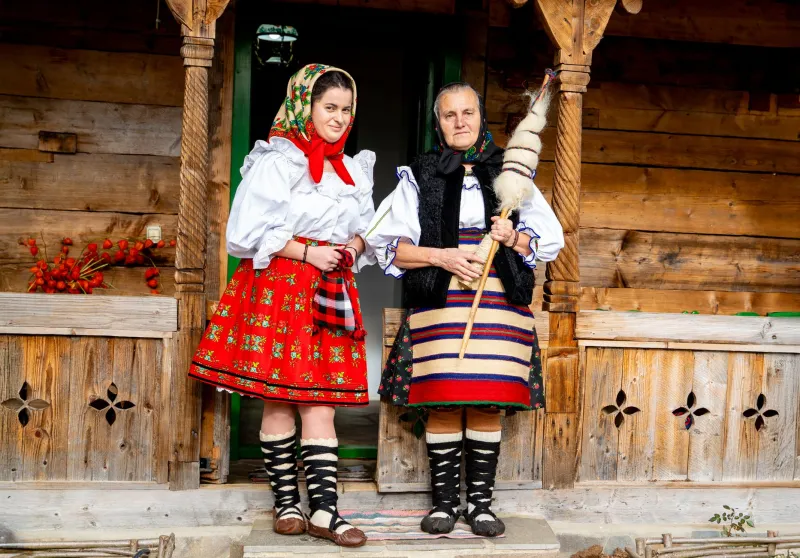
Romanian-American writers and artists have spent considerable energy trying to translate this experience for audiences who didn't grow up with the word. The challenge isn't just linguistic — it's that the emotional state dor describes requires a certain relationship to place and permanence that American culture tends to discourage. To feel dor fully, you have to have let somewhere matter to you in a way that makes leaving costly.
In a culture that celebrates moving on, that kind of attachment can feel like a liability. Romanian tradition suggests it's actually a form of wealth.
Learning to Name What You Already Feel
You don't have to speak Romanian to find something useful in dor. You just have to be willing to sit with the idea that there are emotional states your language hasn't given you permission to fully inhabit.
The next time you feel that unnamed pressure — driving past the house you grew up in, hearing a song from a specific year, smelling something that pulls you somewhere you can't quite locate — maybe reach for a different word than nostalgic. Maybe let it be something bigger and less tidy. Something that doesn't resolve.
Maybe let it be dor.
The Carpathians have been producing that feeling for thousands of years. They've had time to give it a name worth keeping.