The Villages That Emptied Out — And What They're Still Trying to Tell Us
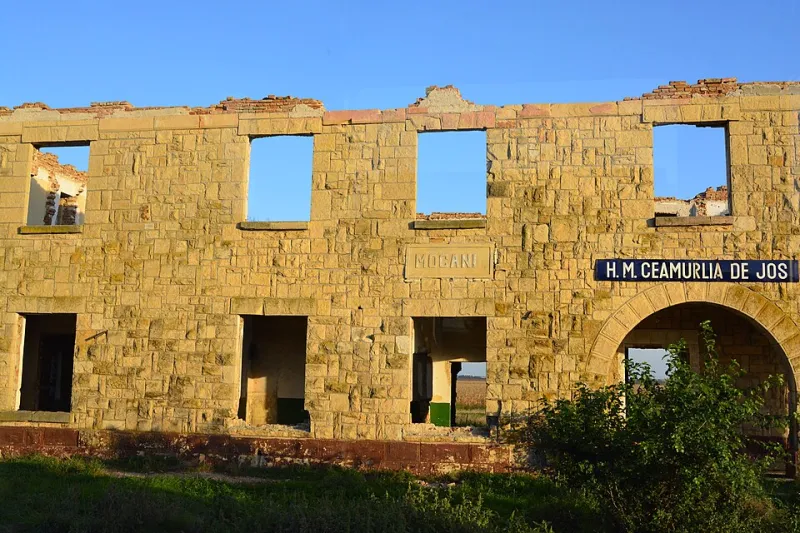
Photo: Joe Mabel, CC BY-SA 4.0, via Wikimedia Commons
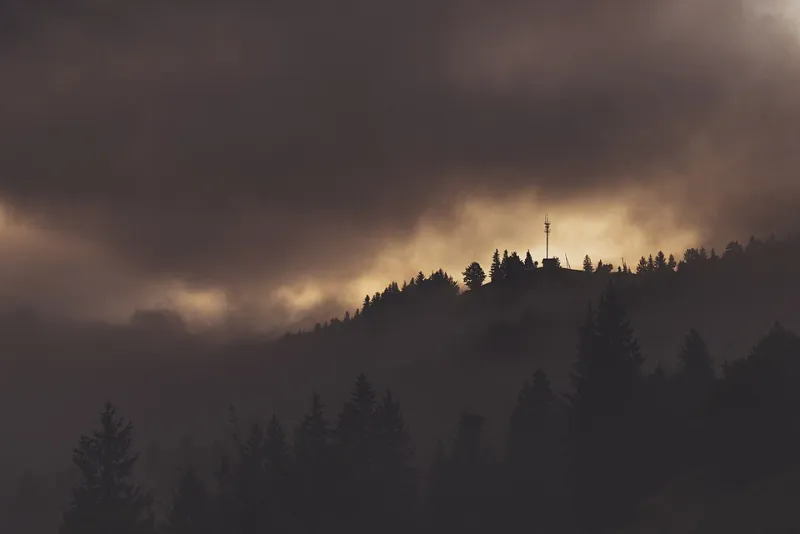
There's a village in the Apuseni Mountains — you won't find it on most tourist maps — where twelve people still live. Twelve, in a place built for a few hundred. The houses are mostly intact. Gardens have gone to weeds but the structures hold. A church sits at the center of the settlement with its doors locked, its frescoes fading behind walls that nobody is around to maintain. One of the twelve remaining residents, an elderly woman, tends a small vegetable plot and keeps two goats. She has no plans to leave. She also has no illusions about what comes next.
This is not a rare scene in Romania. It is, depending on how you count, a defining one.
How a Country Empties From the Inside
Romania's rural depopulation didn't happen all at once, and it didn't happen for a single reason. It happened in waves, each one stripping away another layer of the people who had lived in these places for generations.
The first major wave was Ceaușescu-era forced urbanization. Starting in the 1970s and accelerating through the 1980s, the communist regime pursued a policy of "systematization" — a bureaucratic word for bulldozing villages and relocating their residents to apartment blocks in cities and industrial towns. The plan was to modernize Romania by erasing its rural character. Thousands of villages were slated for destruction. Hundreds were partially or fully demolished before the regime collapsed in 1989.
The villages that survived systematization faced a different kind of pressure after 1989: economic gravity. Communism's fall opened borders, and young Romanians left — first to Bucharest and other cities, then increasingly to Western Europe. Italy and Spain absorbed enormous Romanian communities through the 2000s. Germany, the UK, and Ireland followed. The pattern was consistent: the young and mobile left, the old and rooted stayed, and the villages aged in place.
A 2021 census confirmed what rural Romanians had been watching happen for decades. The country's population had dropped by nearly 1.5 million since 2011. Most of that loss was concentrated in rural areas. Some villages registered populations of zero.
What It Actually Looks Like
Americans have their own version of this story — the Rust Belt, the hollowed-out small towns of Appalachia and the Great Plains, the agricultural communities that lost their economic reason for existing and then lost their people. The Romanian version has a different texture, partly because the villages themselves are older and more architecturally distinctive, and partly because the cultural weight of what's being lost is different.
Romanian villages weren't just residential units. They were the primary vessels of a folk culture that had been transmitted orally and through practice for centuries — embroidery traditions, agricultural rituals, musical forms, oral literature, food preservation techniques, healing knowledge. The village wasn't just where people lived. It was the institution that maintained all of that.
When the village empties, that institution closes. The knowledge doesn't automatically migrate to the city with the people who leave. Some of it does, carried in memory and habit. A lot of it simply stops being transmitted. The last person who knew how to do a particular thing dies, and the thing dies with them.
Walk through a ghost village in Transylvania or Maramureș and you feel that specific weight. The carved wooden gates — those elaborate, story-telling structures that Haiducii has written about before — stand in front of overgrown properties. The carvings are still legible. The stories they tell are still technically there. But there's no community left to tell them to.
The Unexpected Reversals
Here's where the story gets more complicated, and more interesting.
Some of these villages are coming back. Not to their former populations — that's not happening — but to a different kind of life, one that's harder to categorize.
A small but visible movement of young Romanians, many of them educated urbanites disillusioned with city life, has been moving into depopulated villages and attempting to rebuild something. Not a recreation of what was there before — they're clear about that — but a new form of rural community that draws on traditional practices while being honest about the 21st century it exists in. They're growing food, restoring buildings, learning crafts from the elderly residents who remained, and documenting what they learn before it disappears.
Some villages have attracted foreign buyers, particularly from Western Europe — Dutch, German, and British citizens who saw prices that were unimaginable in their home countries and bought old farmhouses as second homes or permanent relocations. This influx brings money and restoration but also complications: property values shift, the cultural character of the village changes, and the question of who a place is "for" becomes genuinely contested.
A handful of villages have been deliberately revived as cultural tourism destinations, with varying degrees of authenticity and success. The risk here is obvious — turning a living community into a performance of itself for outside audiences is a well-documented path to hollowness. But done carefully, with actual residents in genuine economic control, it can work.
The Question These Places Are Asking
There's a broader conversation happening in the United States right now about where people choose to live and why — remote work enabling geographic flexibility, housing costs making cities impossible for many, a growing sense that dense urban life isn't delivering on its promises for everyone. Younger Americans are looking at small towns and rural areas with new eyes, asking questions their parents' generation largely didn't ask.
Romania's ghost villages are, in a sense, an extreme version of that same question. They represent what happens when the economic logic of a place collapses completely and no replacement logic arrives in time. They're the end state of a process that American small towns are currently somewhere in the middle of.
But they're also proof that places can come back from that edge, at least partially, if someone decides they're worth coming back to. The woman with the goats in the Apuseni Mountains isn't waiting for a policy solution or an economic development plan. She's just staying, tending her garden, keeping the place inhabited for one more season.
That's not nothing. In a village of twelve, it might be everything.