Steal from the System, Give to the People: How Carpathian Outlaw Logic Is Running Through Modern Resistance

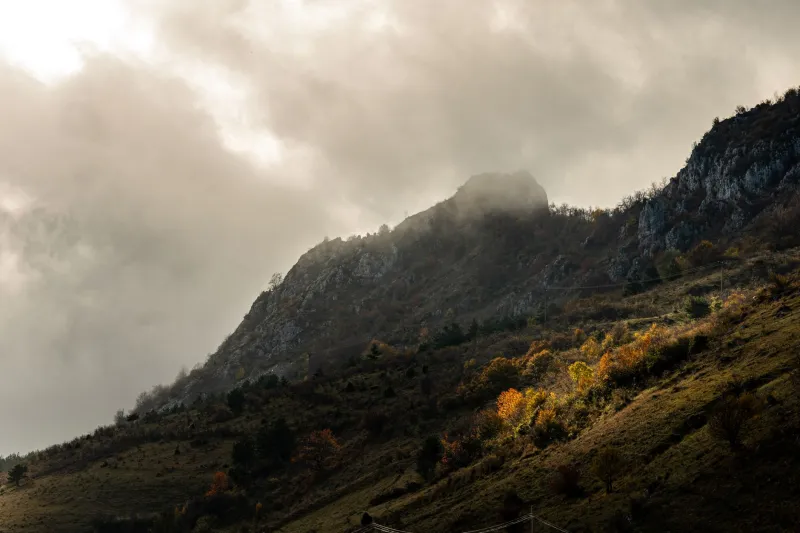
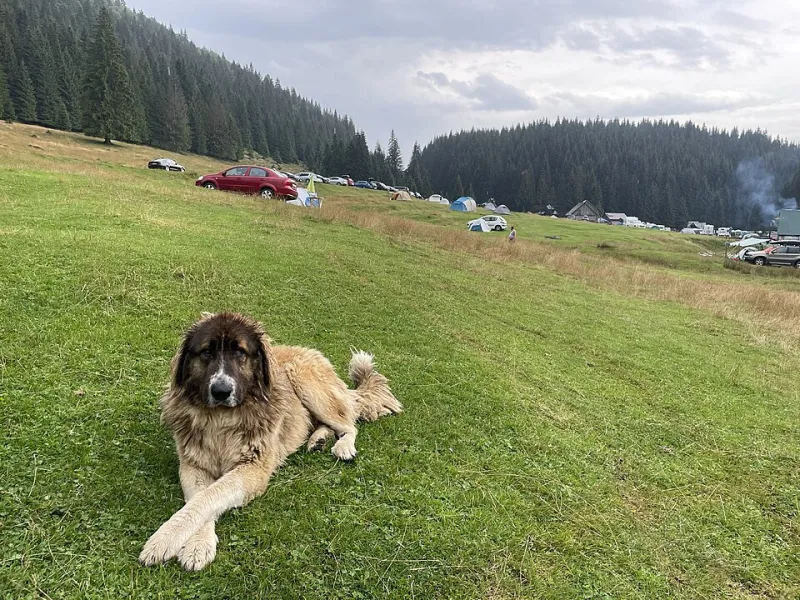
Photo: Lee Key lee_key, CC0, via Wikimedia Commons
There's a moment in almost every resistance story — historical or contemporary — where someone in a basement, a forest clearing, or a Signal group chat figures out the same thing. You can't beat a centralized power by being centralized yourself. You have to move differently, trust differently, and distribute everything: resources, decisions, risk.
Carpathian outlaws — the haiducii — figured that out centuries ago. And whether today's organizers know it or not, they're often running the same playbook.
Who Were the Haiducii, Really?
The popular image is romantic: a cloaked figure on horseback, robbing boyar convoys and vanishing into the mountain fog. And sure, some of that happened. But strip the mythology down and what you find is something more interesting than legend — you find a functional model for operating outside institutional power.
From roughly the 16th through the 19th centuries, bands of haiducii moved through the Carpathian mountain range, operating in the spaces between Ottoman authority, Romanian nobility, and the peasant communities caught between them. They weren't a standing army. They weren't a political party. They were, in the most practical sense, a distributed network with shared values, flexible structure, and deep local knowledge.
They survived because they were embedded in communities that protected them. They thrived because they redistributed enough wealth — grain, livestock, occasionally coin — to make that protection worth offering. And they stayed effective because no single leader, no central cache, no fixed location made them easy to dismantle.
Sound familiar?
The Decentralization Principle
One of the most consistent features of haiducii band organization was the deliberate avoidance of top-heavy command. A band might have a captain — a căpitan — but authority was earned continuously, not assumed permanently. Decisions affecting the whole group were made collectively around a fire, not handed down from a single authority figure.
This isn't romanticized folklore. It's documented in oral histories and in the accounts of Romanian historians like Nicolae Iorga, who noted the remarkably flat social structures within outlaw bands compared to the rigid hierarchies they were fighting against.
Fast forward to the early 21st century and you'll find remarkably similar logic embedded in how many protest movements organize themselves. Occupy Wall Street's horizontal structure, the leaderless cell models used by environmental activists, the distributed decision-making frameworks in mutual aid networks during the COVID-19 pandemic — all of them, whether consciously or not, echo the same core insight: a network with no single head is hard to decapitate.
Academic researchers studying social movements have a term for it — "distributed resilience" — but the haiducii just called it survival.
Resource Redistribution as Political Act
Here's where it gets interesting for a modern American audience. We tend to think of resource redistribution as a policy debate — something that happens in Congress or gets argued about on cable news. The haiducii treated it as a direct action with immediate, tangible stakes.
When a band intercepted a boyar's grain shipment and distributed it across three villages before the authorities could respond, they weren't making an ideological statement. They were solving a food problem while simultaneously building the community trust that kept them alive another season.
That logic — solve a real problem, build a real relationship, create a real obligation of mutual protection — is exactly what organizers in contemporary mutual aid networks describe when they talk about the difference between charity and solidarity. The food pantry that becomes a community hub. The bail fund that becomes a legal defense network. The neighborhood watch that becomes a tenant organizing committee.
None of these modern organizers are reading Romanian folklore to get their ideas. But the underlying logic is the same because the underlying problem is the same: how do you build power and protection for people who have been excluded from institutional structures?
The Mountain as Strategic Asset
The Carpathians weren't just a backdrop. They were a tool. Haiducii bands used terrain knowledge as a form of strategic advantage that no external authority could easily replicate. Passes that locals knew and outsiders didn't. Forest routes that moved faster than roads. Mountain villages that could absorb a band of outlaws into ordinary daily life within minutes of a warning call.
Contemporary resistance thinkers talk about something similar when they discuss "terrain advantage" in an information environment. Knowing the local networks — the community organizations, the informal leaders, the communication channels that exist outside official platforms — is a form of strategic knowledge that outside actors simply don't have.
This is why, in contexts ranging from Indigenous land rights movements in North America to labor organizing in the American South, the most durable resistance efforts are almost always locally rooted in ways that external support can supplement but never replace. The mountain, metaphorically speaking, still matters.
What Gets Lost in Translation
It's worth being honest about the limitations of the comparison. The haiducii operated in a world without mass media, without global supply chains, without the kind of surveillance infrastructure that modern states can deploy. Some of what made their tactics effective was simply the friction of pre-modern information travel.
And romanticizing them too heavily does a disservice to both history and to contemporary organizers who are dealing with genuinely new problems. An encrypted messaging app is not the same as a mountain pass. A mutual aid spreadsheet is not a band of outlaws.
But the core philosophical architecture — decentralized structure, community embeddedness, resource redistribution as relationship-building, terrain knowledge as strategic advantage — those aren't artifacts of a particular historical moment. They're responses to a particular kind of problem: how do people without institutional power protect themselves and each other?
That problem hasn't changed. Which is maybe why the answers keep rhyming across centuries.
The Playbook Nobody Wrote Down
The haiducii didn't leave manifestos. They left songs, and stories, and the memory of specific acts — a boyar humiliated, a village fed, a prisoner freed. The philosophy was encoded in practice, not text.
Maybe that's the most useful thing contemporary movements can take from the Carpathian tradition: the idea that a playbook doesn't have to be written to be real. Communities that have survived by their wits across generations carry tactical knowledge in their practices, their rhythms, their ways of gathering and deciding and protecting each other.
Sometimes the most sophisticated resistance strategy is the one that looks, from the outside, like just the way people do things around here.
The mountain keeps its secrets. But if you know how to listen, it'll tell you everything.