No Holes, No Problem: The Ghostly Romanian Flute That Runs on Pure Breath
Picture a flute. You're probably imagining something with keys, or at minimum a row of finger holes you cover and uncover to change pitch. That's how flutes work. That's just physics, right?
Tell that to the tilincă.
This ancient Romanian instrument — essentially a plain wooden tube, open at one end, closed at the other — has zero finger holes. Not a single one. And yet a skilled player can coax from it a full melodic range, bending notes with eerie precision, sliding between tones in ways that make the thing sound less like a musical instrument and more like a voice from somewhere you can't quite place. A mountain spirit. A memory. Something that knows you.
If you've never heard a tilincă, go find a recording right now. We'll wait. And when you come back, we'll explain how something that sounds that extraordinary is technically just a hollow stick.
A Tube, a Breath, and Centuries of Practice
The mechanics of the tilincă are deceptively simple and maddeningly difficult at the same time. The instrument is typically carved from elderwood, willow, or sometimes maple — whatever a Carpathian shepherd happened to have on hand. It's end-blown, meaning you hold it vertically and blow across the top opening the way you might blow across the mouth of a bottle. The air column inside vibrates, producing a tone.
Here's where it gets interesting. Without finger holes to change, the player controls pitch entirely through breath pressure and tiny, almost imperceptible adjustments of the lips and mouth cavity. A small increase in air speed jumps the instrument into a higher harmonic register. A slight relaxation drops it back. The full melodic vocabulary of the tilincă lives in the space between those harmonics — the microtones, the slides, the wavering ornaments that give the instrument its signature sound, something between a human voice cracking with emotion and a wind that's learned to sing.
Mastering this took shepherds years. Some say it was easier to learn as a child, before you'd developed bad habits. Others claim the instrument was essentially impossible unless you grew up at altitude, where the air itself teaches you something about patience and breath.
Born on a Mountainside, Not a Stage
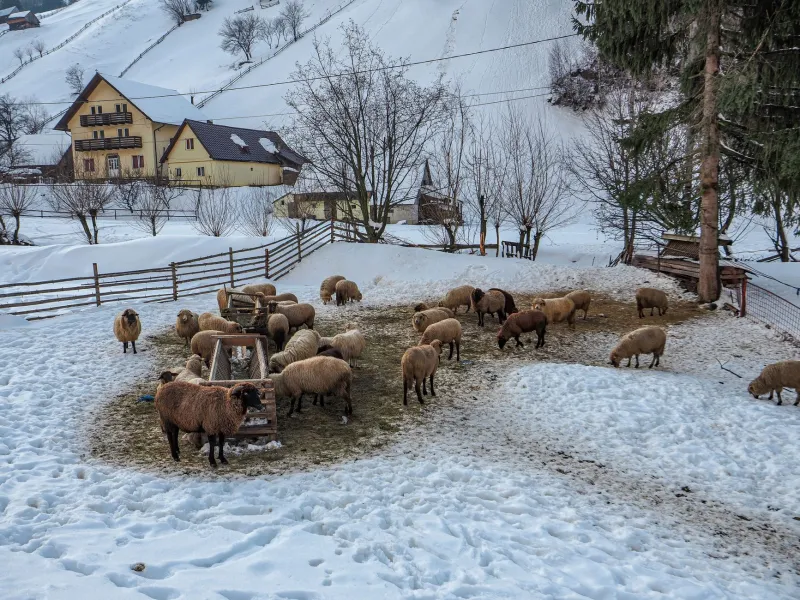
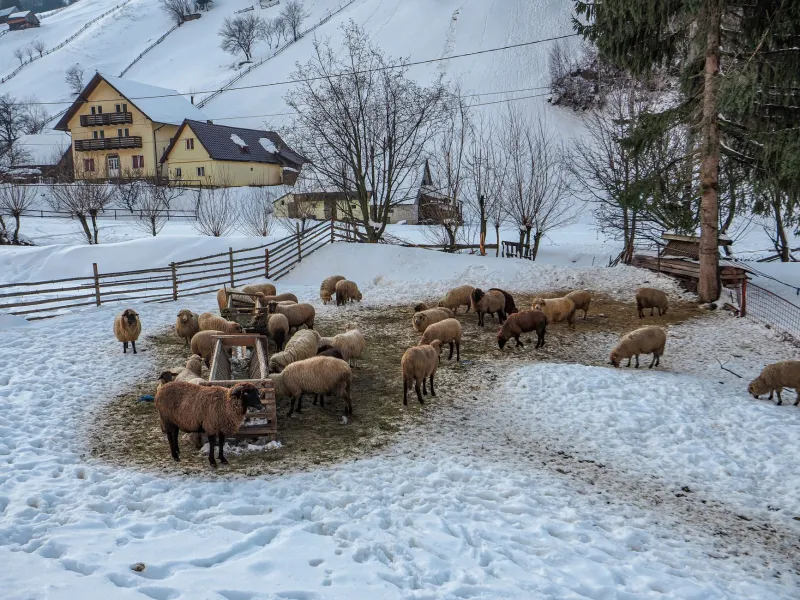
The tilincă was never a concert instrument. It didn't belong in a hall or on a platform with an audience below it. It was mountain music in the most literal sense — played by shepherds during the long weeks of summer transhumance, when they drove their flocks up into the high Carpathian pastures and essentially disappeared from the rest of Romanian society until autumn.
Up there, alone or nearly alone, a shepherd with a tilincă wasn't performing. He was just... existing with sound. Playing to the sheep, to the treeline, to the particular quality of light that happens at dusk in the mountains when everything goes blue and soft and slightly unreal. The music wasn't composed. It was improvised, responsive to mood, to weather, to how tired you were and how far from home.
That context matters. It explains why tilincă music feels so different from folk music designed for dancing or celebration. It's introspective in a way that's almost uncomfortable. It sounds like longing made audible. Like someone working something out.
American listeners sometimes compare it to the blues in that sense — not in sound, but in emotional function. Music that processes rather than performs.
The Near-Death of a Sound
The 20th century was not kind to the tilincă. Industrialization pulled people off the mountain pastures. Collectivization under communist rule disrupted the traditional pastoral economy that had sustained shepherd culture for centuries. Young Romanians moved toward cities, toward electric guitars and pop radio, toward a world that had little use for an instrument so difficult it took years to play and so quiet it couldn't fill a room.
By the late communist period and into the 1990s, the tilincă had essentially become a museum piece. You could find recordings in ethnomusicology archives. You could see specimens behind glass. Actually hearing one played by someone who truly knew what they were doing was increasingly rare.
There's something almost fitting — and genuinely sad — about an instrument that was always meant to be heard alone on a hillside becoming something only archivists remembered.
The Keepers of the Tube
But here's the thing about instruments that sound like ghosts: they tend to haunt people.
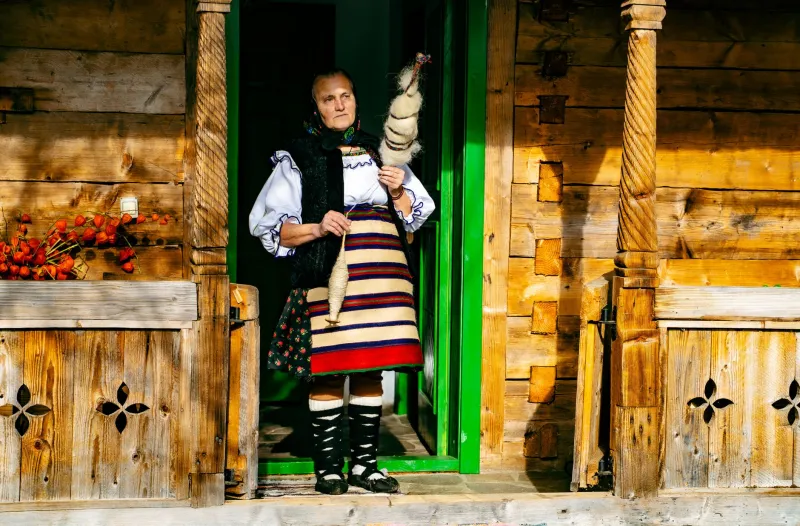
Over the past two or three decades, a small but deeply committed community of Romanian musicians and ethnomusicologists has been working to pull the tilincă back from the edge. Some of them learned from the last generation of traditional players — elderly men in mountain villages who still remembered the old technique and were willing to teach it. Others pieced together the practice from recordings and written descriptions, essentially reverse-engineering a tradition from fragments.
Musicians like Tiberiu Ceia and various members of Romania's folk revival scene have incorporated the tilincă into contemporary recordings, introducing it to listeners who'd never heard of it. Folk festivals in the Carpathian region — particularly in areas like Maramureș and Bucovina, where traditional culture has always held on with particular stubbornness — have become important venues for tilincă players to connect, compare notes, and find younger students.
Social media has helped in unexpected ways. A short video of someone playing a tilincă at sunset tends to go quietly viral in certain corners of the internet — the folk music enthusiasts, the world music community, the people who spend their evenings on YouTube falling down rabbit holes of instruments they've never heard of. The tilincă is exactly the kind of thing that stops a scroll.
Why This Matters Beyond Romania
For American audiences, the tilincă offers something genuinely rare: a window into a musical tradition that developed completely outside the Western framework most of us grew up with. No sheet music. No formal pedagogy. No stages or audiences or commercial pressure. Just a person, a piece of wood, and decades of accumulated knowledge about what the human breath can do.
In a music culture dominated by production and polish, there's something almost radical about an instrument this raw and this demanding. You can't fake it. You can't Auto-Tune a tilincă. Every note you hit is a note you earned through years of practice and a willingness to sound terrible for a very long time before you sound extraordinary.
There's also something worth sitting with in the instrument's original context — that idea of music made for no audience at all, music that existed purely in the moment it was played, dissolving into mountain air and leaving no trace. In an era where everything gets recorded, shared, and monetized, the tilincă's origin story feels almost like a rebuke.
Some of the world's most beautiful music was never meant for you. It was meant for a hillside at dusk, for sheep who didn't care about technique, for a sky that had heard everything before and wasn't impressed.
And somehow, impossibly, it survived long enough for you to hear it anyway.