Everyone Gets a Role: How Romanian Weddings Once Turned Entire Villages Into Living Theater
Imagine your wedding — but instead of seating charts and a DJ playlist, you had a cast of thirty neighbors with ceremonial titles, a flag planted in your yard three days before the big event, and a group of 'thieves' whose entire job was to kidnap the bride mid-celebration. No Pinterest board required. No venue deposit. Just a village, a set of ancient roles, and a ritual so layered with meaning it took days to fully unfold.
That was the Romanian wedding. And honestly? It sounds like the most alive thing anyone's ever done to mark two people choosing each other.
The Wedding Didn't Start on the Wedding Day
In traditional Romanian culture — particularly across regions like Transylvania, Moldavia, and Wallachia — a wedding wasn't an event. It was a sequence of events, each one carrying its own symbolic weight. The whole thing could stretch across three days or more, with different rituals anchoring different phases: the betrothal, the pre-wedding preparations, the ceremony itself, and the post-wedding integration of the new bride into her husband's family and community.
And crucially, none of it worked without the village.
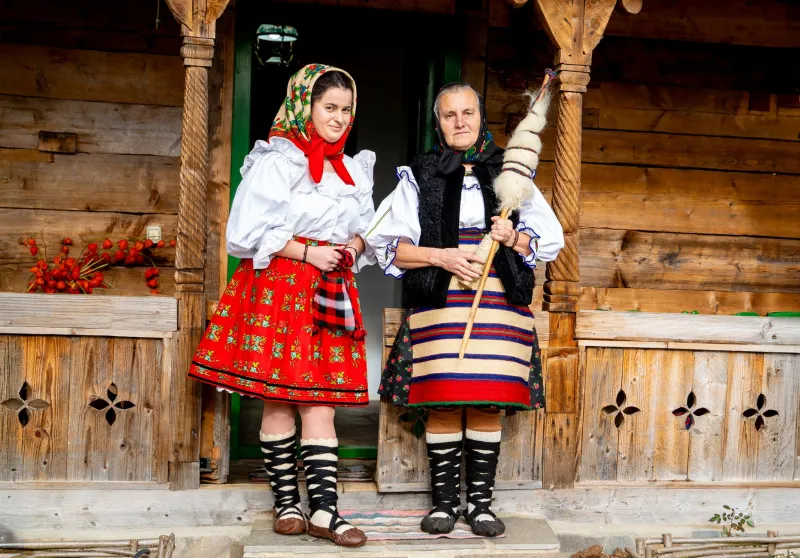
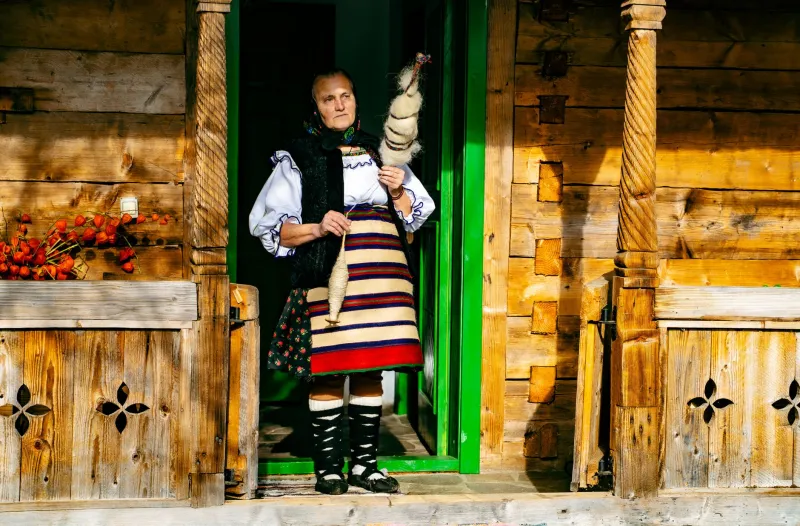
This wasn't just about having a lot of guests. It was about assigning specific, named roles to specific people — roles that came with actual responsibilities, costumes, and in some cases, lines to deliver. The Romanian wedding was, in the truest sense, a community performance. Everyone knew the script. Everyone had a part.
Meet the Cast
The Vătaf (or Staroste) — Think of this person as the master of ceremonies, but with actual authority. The vătaf organized the procession, kept the ritual timeline on track, and often served as the official voice of the groom's family during negotiations and toasts. In some regions, this role was highly respected and only given to someone with real standing in the community — an elder, a trusted neighbor, someone who'd been to enough weddings to know exactly how the whole thing was supposed to go.
The Steagarul (Flag-Bearer) — Days before the wedding, a tall wooden pole decorated with ribbons, greenery, flowers, and sometimes fruit would be raised outside the groom's home. The person carrying and tending this flag wasn't just doing decoration. The flag was a public announcement — a signal to the whole village that something significant was happening. It was an invitation and a declaration rolled into one. The steagarul carried it in the wedding procession with the kind of gravity usually reserved for military honors.
The Nași (Godparents) — Not godparents in the baptism sense, though the role overlaps in spiritual weight. The nași at a Romanian wedding were the couple's official sponsors and witnesses — often an older married couple whose own stable union was meant to transfer something like blessings or good fortune onto the newlyweds. They weren't just sitting in the front row. They were active participants, responsible for guiding parts of the ritual and, in many traditions, bearing real moral responsibility for the marriage's success.
The Druște and Voinici (Bridesmaids and Groomsmen, But Make It Folk) — These weren't just people chosen for their Instagram aesthetic. The druște, the bride's attendants, helped her dress according to ritual, participated in specific songs and laments, and in some regions performed ceremonial weeping — not fake crying, but a formalized tradition of expressing grief at the bride leaving her family home. The voinici, meanwhile, were essentially the groom's honor guard, responsible for the procession and for protecting the groom's interests throughout the celebration.
The Ritual Thieves — Here's where it gets genuinely fun. In many regional traditions, a group of young men — sometimes friends of the groom, sometimes community members playing an assigned role — would 'steal' the bride at some point during the wedding feast. This wasn't chaos. It was choreographed. The groom and his party would then have to 'ransom' her back, usually through a negotiation involving drinks, jokes, songs, and a ceremonial payment. It sounds like a bit, but it carried real symbolic meaning: the community was testing the groom's commitment, his resourcefulness, his willingness to fight (playfully) for his bride.
The Bride's Lament — And Why It Wasn't Sad
One of the most striking elements of traditional Romanian weddings was the custom of ritual weeping. In many communities, the bride was expected to cry — or at least perform a formalized lament — as she left her parents' home. There were even specific songs for this moment, called cântece de mireasă (bride's songs), that expressed sorrow at leaving one family while anticipating the beginning of another life.
To modern American ears, this sounds depressing. But the lament served a crucial function: it acknowledged the real weight of the transition. It didn't pretend the moment was uncomplicated. It let the grief and the joy exist at the same time, in public, witnessed by everyone who mattered. There's something almost radical about that — the refusal to perform only happiness when something genuinely significant is changing.
What the Aesthetic Wedding Economy Can't Buy
American wedding culture has spent the last two decades optimizing for beauty and personalization. Couples spend an average of $30,000 on a single day. They hire photographers, calligraphers, florists, and 'experience designers.' And still — still — you hear people say their wedding felt hollow, or rushed, or like a performance for guests rather than a genuine ritual for themselves.
The Romanian model flips that entirely. The community wasn't a passive audience. The village wasn't a backdrop. Every person at that wedding had a function, a responsibility, a reason to be invested in what was happening. When the flag went up outside the groom's house, the neighborhood knew. When the bride wept at the threshold of her childhood home, everyone understood what was being marked. When the 'thieves' made off with the bride and the groom had to negotiate her return, the whole room was in on the joke — and the meaning behind it.
There's a word in Romanian — datină — that roughly translates to 'custom' or 'tradition,' but carries a deeper sense of something owed, something that has always been done and must continue to be done. These wedding rituals weren't optional flourishes. They were datină. They were the community's way of saying: we see you, we witness this, we hold this with you.
A Vanishing Script
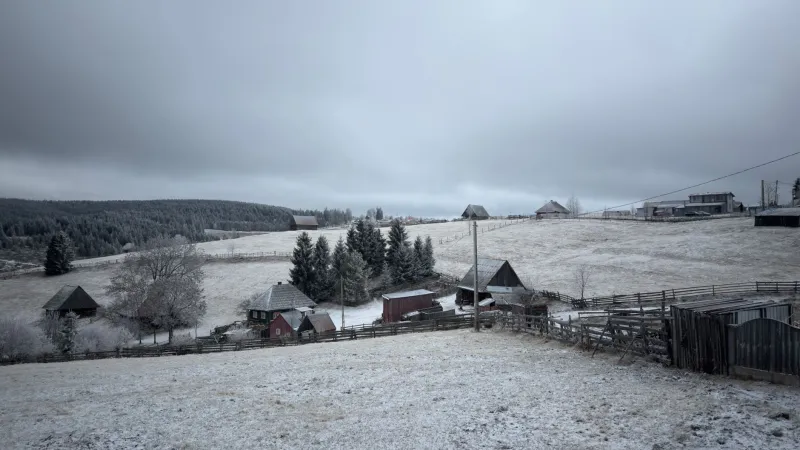
Most of these roles and rituals have faded significantly, particularly in urban Romania. Modernization, migration, and the disruptions of the 20th century — including decades of communist rule that actively suppressed folk traditions — took a heavy toll. What survives tends to live in rural villages, in ethnographic museums, in the memories of grandparents who still remember when a wedding was something the whole road participated in.
But there's a quiet revival happening. Younger Romanians, particularly those in the diaspora, are rediscovering these customs with fresh eyes. Ethnographers are documenting what remains. And a growing number of couples — Romanian and otherwise — are asking the same question that drives the whole thing: what if a wedding were less about the party and more about the passage?
The Carpathian villages figured that out centuries ago. They just had the good sense to give everyone a costume.