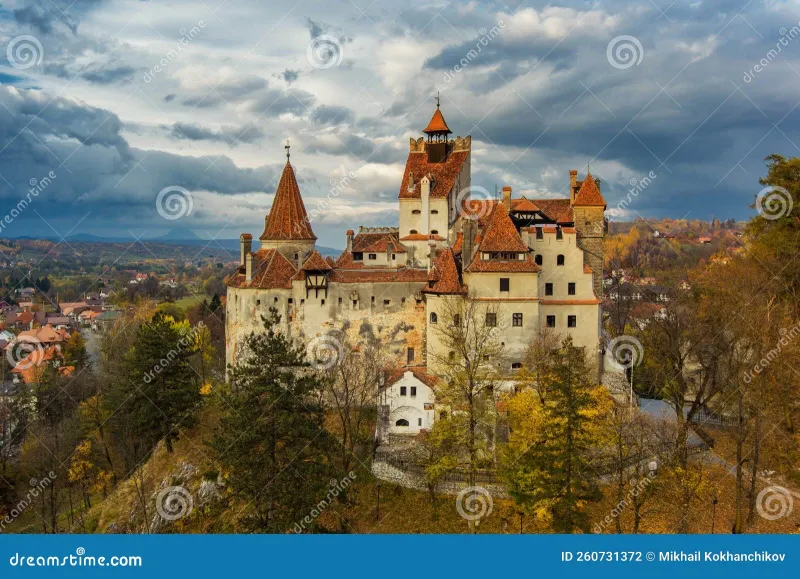
Same Outlaw, Different Mountain: Why Every Culture Invented Its Own Robin Hood

Photo: MODIS Land Rapid Response Team, NASA GSFC, Public domain, via Wikimedia Commons
Picture this: a man driven from ordinary life by an unjust system. He retreats to the wilderness — forest, mountain, steppe, it doesn't matter. He builds a small band of loyal followers. He robs from those with too much and distributes the surplus to those with nothing. He becomes a legend while still alive, and a myth the moment he dies.
Now tell me — which story is that?
It's the Carpathian haiducii of Romania and Bulgaria. It's Robin Hood of Sherwood Forest. It's Jesse James as reimagined by Missouri folk ballads. It's Pancho Villa, Ned Kelly, Stenka Razin, the Chinese xia of wuxia tradition, the Japanese otokodate. The names are different. The mountains and forests change. The languages are unrecognizable to each other. But the story? The story is identical.
That's not a coincidence. That's something worth sitting with.
The Template That Never Gets Old
Folklorists have a name for this kind of recurring narrative structure: a morphological archetype. Vladimir Propp, a Russian scholar who spent years dissecting folk tales, noticed that stories tend to follow predictable patterns regardless of cultural origin. The outlaw-hero narrative is one of the most stable of these patterns — so stable, in fact, that it shows up on every inhabited continent and in virtually every historical era we have records for.
What makes the haiducii tradition particularly interesting is how explicitly it formalizes what other cultures leave implied. Romanian and Balkan folklore didn't just celebrate these outlaw bands — it built an ethical framework around them. The haiduc wasn't just a thief with good PR. He operated by a recognizable code: protect the poor, punish the corrupt, never harm the innocent, maintain loyalty to the band above all else. That code was passed down orally, embedded in songs called balade, and reinforced through storytelling that functioned almost like community law.
You find echoes of that same code in the American West's romanticization of outlaws, where Jesse James was eulogized in newspapers as a man who never robbed a working farmer. You find it in the Japanese otokodate tradition, where urban street gangs in the Edo period fashioned themselves as protectors of commoners against samurai abuse. The specifics differ wildly. The moral logic is nearly word-for-word the same.
Justice Without a Courthouse
Here's the part that actually explains why these stories keep getting invented: they emerge specifically in places and times where official justice has collapsed or was never available to begin with.
The haiducii rose to prominence during Ottoman rule in the Balkans — a period when Romanian and Bulgarian peasants had essentially no legal recourse against exploitation by local administrators, tax collectors, and landowners. The outlaw band filled a vacuum. It wasn't that people thought theft was virtuous. It was that the outlaw represented the only available mechanism for redistributive justice in a system designed to extract without returning anything.
Same story in Sherwood Forest. Same story in the post-Civil War American South, where Jesse James's legend was cultivated partly because poor white Missourians felt economically crushed by Northern railroad interests. Same story in colonial Australia, where Ned Kelly's armored last stand against the police became a symbol for Irish-Australian working-class resentment.
The outlaw-hero doesn't appear when justice is functioning. He appears when people have stopped believing it ever will.
Why It Keeps Showing Up on Your Screen
This is where things get genuinely interesting for a modern audience. The outlaw-hero archetype hasn't faded — it's migrated. Look at the entertainment landscape of the last two decades and you'll find it everywhere, just wearing different clothes.
The entire premise of The Dark Knight rests on this tension: what happens when the official system fails so completely that a masked vigilante seems like the reasonable alternative? Peaky Blinders, Narcos, Yellowstone, Squid Game — all of them are, at their structural core, asking the same question the haiducii ballads asked three centuries ago: what do ordinary people do when the powerful make the rules and rig the game?
Video games have gone even deeper. The Assassin's Creed franchise is essentially a haiducii narrative reskinned across a dozen historical settings. Red Dead Redemption is so committed to the outlaw-hero mythology that it includes the inevitable tragic ending the folklore always demands — because the noble outlaw can never be allowed to simply win and retire. That would break the story's purpose.
The archetype is also running through contemporary activism in ways that are hard to ignore. Hacktivist collectives, whistleblowers, and certain strains of mutual aid organizing all draw — consciously or not — on outlaw-hero logic. The rhetoric of "taking from the system to give back to the people" is ancient. The platforms are just newer.
What We're Actually Saying When We Tell These Stories
There's a cynical reading of all this, worth acknowledging. The outlaw-hero myth can function as a pressure valve — a way for societies to process frustration with inequality without actually addressing it. Singing about Jesse James doesn't redistribute wealth. Watching a Robin Hood film doesn't reform tax policy. The story might actually make people feel better about injustice without motivating them to change it.
But there's another reading, and it's the one that feels truer to how these narratives actually function in communities over time.
The haiducii songs weren't just entertainment. They were a form of collective memory about what resistance looked like, who it was for, and what values it was supposed to serve. They kept alive the idea that the powerful were not automatically legitimate — that authority had to be earned through fairness, and that people who violated that compact could be opposed. That's not nothing. That's actually a pretty radical ongoing political education delivered through folk music.
Every culture that invented its own Robin Hood was, in that act of invention, insisting on something: that the current arrangement of power is not natural, not permanent, and not beyond challenge. The mountain always produces the outlaw because the mountain always has people at the bottom of it looking up at those who took more than their share.
The Carpathians just happened to name him first.