Born from Hunger, Served at Fine Dining: The Outlaw Foods That Refused to Stay Poor
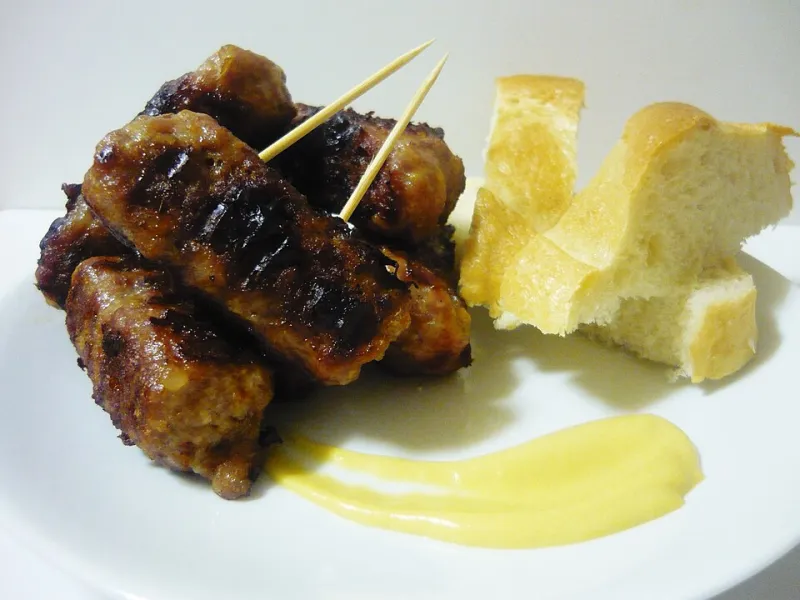
Photo: Romanian Cooker, CC BY-SA 4.0, via Wikimedia Commons
There's a certain kind of dish that doesn't start in a kitchen. It starts in a moment of desperation — limited fuel, whatever's available, the need to feed people quickly and quietly without attracting attention. And sometimes, out of that desperation, something genuinely extraordinary gets invented.
Romanian cuisine has more than its share of those dishes. And the stories behind some of the country's most enduring foods run directly through the mountain hideouts of Carpathian outlaws and the bleak reality of forced labor camps — places where cooking was an act of survival, and where the act of eating together became, quietly and stubbornly, an act of resistance.
Cooking Without a Kitchen
Picture a haiducii camp in the late 18th century. Somewhere in the Carpathian highlands, a band of outlaws has been moving for three days. They can't light a fire that produces visible smoke. They have dried beans, smoked pork fat, wild garlic pulled from a hillside, and maybe some cornmeal. They have maybe forty minutes before they need to move again.
What they cook in those forty minutes isn't going to win any awards. But it's going to be efficient, nutritious, and built on a flavor logic that comes from centuries of working with exactly these ingredients in exactly these conditions.
This is where a significant chunk of Romanian peasant and outlaw cooking actually comes from — not from abundance, but from the disciplined creativity of scarcity. The kind of cooking where you render every bit of flavor out of a smoked bone because that bone is all you have. Where wild herbs aren't a garnish but a primary ingredient because they're free and they're everywhere.
The Dishes That Carry the History
Ciorbă — the sour soup that forms the backbone of Romanian daily eating — has roots that go deeper than any written recipe. The souring agent, traditionally fermented wheat bran called borș, was something that could be carried, maintained, and used across weeks of travel. It preserved food in the absence of refrigeration and added a sharp, complex flavor that made modest ingredients taste like something intentional.
Haiducii bands almost certainly carried some version of borș culture with them. The soup it produces is endlessly adaptable — almost any protein, any foraged green, any root vegetable can be incorporated — and it was the kind of meal that could be stretched to feed more mouths than originally planned, which mattered enormously in communities where feeding a passing band of outlaws was both a social obligation and a survival calculation.
Then there's mămăligă — the cornmeal porridge that most Americans would recognize as a close relative of polenta. In the Carpathian context, it was the great equalizer. It required almost nothing: cornmeal, water, salt, heat. It could be made in a single pot over a small fire. It could be eaten soft or allowed to firm up and sliced cold the next day. It was the outlaw's bread and the peasant's staple and the prisoner's ration, all in one.
But here's what's interesting: mămăligă was never just fuel. In every context where it appears — outlaw camp, village hearth, labor camp barracks — it becomes a social object. The stirring of the pot (malai) was communal. The eating was communal. Even under brutal conditions in the forced labor camps of the communist era, former prisoners have described the ritual of sharing mămăligă as something that preserved a sense of humanity when everything else was stripped away.
The Labor Camp Kitchen
This is the part of the story that doesn't usually make it into travel food writing, but it's essential. During the communist period, Romania's network of forced labor camps — particularly those associated with the Danube-Black Sea Canal construction in the early 1950s — created another layer of this culinary history.
Prisoners worked in brutal conditions with minimal food. What they received was intentionally degrading — thin soups, stale bread, whatever was cheapest and most available. But within those constraints, prisoners developed micro-traditions around food that served as both psychological survival and cultural preservation.
Former political prisoners have described elaborate systems for improving terrible rations: hoarding a bit of fat from one meal to enrich the next, trading portions to concentrate certain ingredients, improvising cooking vessels from found materials to prepare something — anything — that tasted like a choice rather than a sentence.
Specific flavor combinations that emerged from these improvisations — beans cooked with whatever smoked meat could be obtained, heavily seasoned with paprika and wild herbs — map remarkably closely onto dishes that are now considered traditional Romanian comfort food. The prison kitchen and the outlaw camp kitchen were operating under similar constraints and arriving at similar solutions.
Why These Foods Are Showing Up on Tasting Menus
Bucharest's restaurant scene has been quietly undergoing something fascinating over the last decade. A generation of Romanian chefs trained in Western European kitchens — Lyon, Copenhagen, London — came home with technique and found themselves drawn to the ingredient logic of their grandmothers' cooking. Not as nostalgia, but as genuine culinary philosophy.
Chef Luca Năstase, who runs one of Bucharest's more talked-about contemporary Romanian restaurants, has described the cuisine of scarcity as "the most honest food tradition we have — nothing is there by accident, everything is there because it had to be."
Dishes that were once markers of poverty — fermented preparations, offal cooked with wild herbs, dense cornmeal preparations with complex soured dairy accompaniments — are being reframed not as humble food elevated by technique, but as sophisticated food that was always sophisticated, just not recognized as such by people who equated sophistication with expense.
It's a reframing that has parallels in American culinary culture. The way Southern Black cooking — developed under slavery and economic exclusion — eventually became the foundation for American cuisine broadly, even as its origins were long obscured. Or the way Depression-era cooking techniques are now treated as high-value culinary knowledge.
The food that people make when they have nothing to spare is often the most technically demanding and philosophically rich. Scarcity is a brutal teacher, but it teaches well.
The Memory in the Meal
There's a Romanian phrase — mâncarea de acasă, "the food of home" — that carries enormous emotional weight. For a culture that has experienced significant emigration, political rupture, and the deliberate erasure of certain historical memories, food becomes one of the most reliable archives.
You can suppress a history. You can burn the books and rewrite the curriculum. But you can't easily remove the muscle memory of how a grandmother stirred a pot, or the flavor association that connects a specific dish to a specific feeling of safety or community.
The foods that came out of outlaw camps and labor camp barracks survived not because they were documented, but because they were eaten and remembered and passed forward. They are, in a very literal sense, edible history — carrying within them the logic of the conditions that created them.
And now they're on tasting menus. Which is either deeply ironic or deeply appropriate, depending on how you look at it.
Probably both.