Rules for the Ruleless: The Ethical Code That Kept Carpathian Outlaw Bands Alive — and Legendary
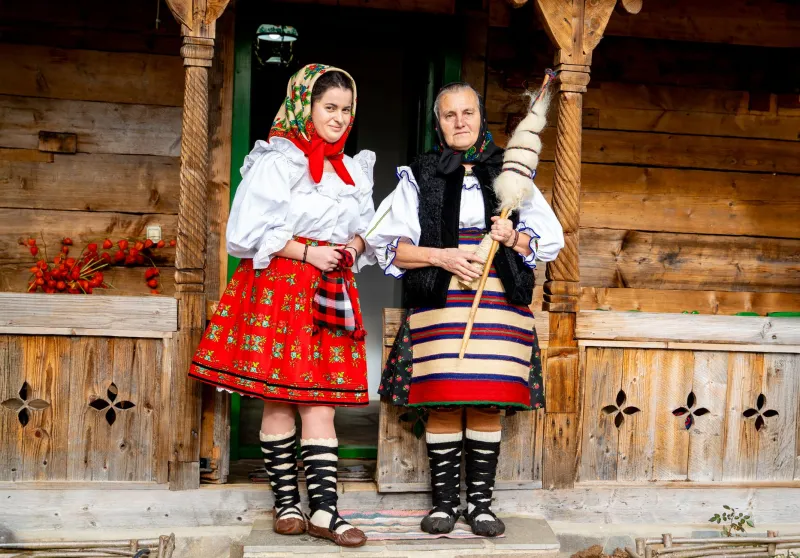
Photo: Olgierd Rudak, CC BY-SA 4.0, via Wikimedia Commons
There's a version of rebellion that's all noise — broken windows, burned bridges, chaos for its own sake. And then there's the other kind. The quiet, disciplined, almost monastic kind that actually changes something.
The haiducii were the second type.
Romanian and Balkan outlaws operating roughly between the 16th and 19th centuries, the haiducii are often flattened into a Robin Hood comparison for Western audiences, which isn't entirely wrong but misses the texture of what made them work. They weren't just stealing from the rich and giving to the poor. They were running a parallel society with its own laws, its own courts, its own moral architecture — and they were doing it in the cracks between empires, under the noses of Ottoman administrators and corrupt boyars who would have loved nothing more than to see them fail.
They didn't fail. And the reason why is worth sitting with for a while.
The Code Nobody Wrote Down
Here's the thing about the haiducii's ethical system: it was never codified. There was no manifesto, no charter, no document you could point to and say here are the rules. The code was transmitted orally, reinforced through song and story, and enforced by something far more powerful than any written law — community reputation.
In the villages of Wallachia, Moldavia, and Transylvania, a haiduc band's survival depended entirely on whether the local population would hide them, feed them, and stay quiet when soldiers came asking questions. That protection was not guaranteed. It was earned, continuously, through behavior. A band that robbed peasants, harmed women, or kept all the loot for themselves would find the barn doors suddenly locked and the well suspiciously dry. Word traveled fast in mountain communities.
So the code wasn't idealistic. It was practical. Being principled was a survival strategy.
Loyalty First, Everything Else Second
Inside a haiduc band, loyalty was the supreme value — not loyalty to an abstract cause, but loyalty to the specific people beside you. Betrayal was considered the gravest possible sin, worse than killing, worse than cowardice. There are countless folk ballads — doine, bocete, epic songs — that treat the traitor within a band as a figure more monstrous than any Ottoman pasha or landlord.
This wasn't just sentiment. A betrayed band was a dead band. The forests and mountains that sheltered them were only safe if everyone kept their mouths shut. So loyalty was enforced with an almost religious intensity. New members were vetted slowly. Trust was built through shared risk before it was extended.
Compare that to the way modern anti-establishment movements often operate — fast, loud, built on social media momentum rather than genuine relationship — and the contrast is stark. The haiducii understood something that contemporary rebels frequently don't: the group is only as strong as the weakest link's commitment, and that commitment has to be cultivated, not assumed.
How They Divided the Spoils
Wealth distribution within a band followed something closer to a democratic model than most 18th-century institutions would have recognized. The leader — the vataf — typically received a larger share, not as a matter of aristocratic privilege but because leadership carried the most risk. Decision-making authority and physical danger were inseparable, and the extra cut reflected that.
Beyond the vataf's portion, shares were distributed based on contribution and need. A member who had family in the village, or who had taken injury, might receive more. A member who had performed poorly or shown poor judgment might receive less — not as punishment exactly, but as a natural consequence of how the accounting worked.
What they took from landlords and tax collectors was often, in a very literal sense, wealth that had been extracted from those same villages. Returning a portion of it wasn't charity. It was restitution. The community understood it that way, which is part of why haiduc leaders like Iancu Jianu and Pintea Viteazul became folk heroes rather than just criminals.
The Lines They Didn't Cross
Every code is defined as much by its prohibitions as its principles. The haiducii, whatever their actual behavior in practice, were understood by tradition to operate under specific restraints. Harming the poor was forbidden. Harming women was forbidden. Churches and monasteries occupied a complicated middle space — sometimes sheltered, sometimes taxed, but rarely violated outright.
There was also a category of enemy that was off-limits not because of mercy but because of strategy. Killing a low-level soldier or minor official created problems. It brought serious military attention and alienated the kind of moderate, fence-sitting villager whose quiet cooperation was essential. The targets that defined a band's reputation were the extractive elites — the absentee landlords, the corrupt administrators, the tax collectors squeezing already-empty pockets.
Choosing enemies carefully wasn't moral squeamishness. It was operational intelligence.
What Contemporary Rebels Keep Getting Wrong
Anti-establishment sentiment in America right now runs hot across the political spectrum — left, right, and the increasingly crowded middle. Everyone seems to feel, with varying degrees of justification, that the system is rigged, the rules don't apply equally, and the people in charge have stopped serving the people they're supposed to serve.
Fair enough. The haiducii would have understood that feeling immediately.
But here's where the comparison gets uncomfortable: the haiducii built something. They didn't just resist — they constructed an alternative, complete with its own accountability structures, its own economy of trust, its own reputation-based enforcement. Their rebellion had architecture.
Most modern anti-establishment movements, particularly those that live primarily online, are better at tearing down than building up. They're excellent at identifying what's wrong and terrible at maintaining the kind of sustained, principled, community-embedded discipline that actually creates lasting change.
The Carpathian outlaws weren't saints. The folk songs romanticize them, and the reality was often messier, more violent, more compromised. But the idea they embodied — that living outside the system requires more discipline, not less, and that your legitimacy depends entirely on how the community around you judges your choices — that idea holds up.
Principle without structure is just attitude. The haiducii knew the difference.
The Legend as Instruction
Folk cultures preserve what they need to remember. The fact that haiduc stories survived centuries of empire, occupation, and eventually communist-era appropriation says something. These weren't just exciting adventure tales. They were instruction manuals for how to resist without losing your soul.
The next time you hear someone romanticize the outlaw life — whether it's a country song, a biker mythology, or a political movement styling itself as the scrappy underdog — it's worth asking the haiduc question: What's the code? Who enforces it? And what does the community that shelters you actually think of how you're behaving?
If there's no good answer to those questions, it's probably not rebellion. It's just noise.