Carpathian Wise Women: The Herb Healers History Tried to Erase
Every American kid learns about Salem. The trials, the accusations, the hangings — it's practically a middle school rite of passage. But while Massachusetts was busy burning through its history books, something far more layered and frankly more fascinating was happening on the other side of the Atlantic, deep in the folds of the Carpathian mountains. Romania had its own tradition of women who walked the razor-thin line between village saint and village threat — and their story is only now getting the serious attention it deserves.
Meet the descântătoare. The name roughly translates to "she who chants" or "she who enchants," and that ambiguity is kind of the whole point.
Not Witches. Something More Complicated.
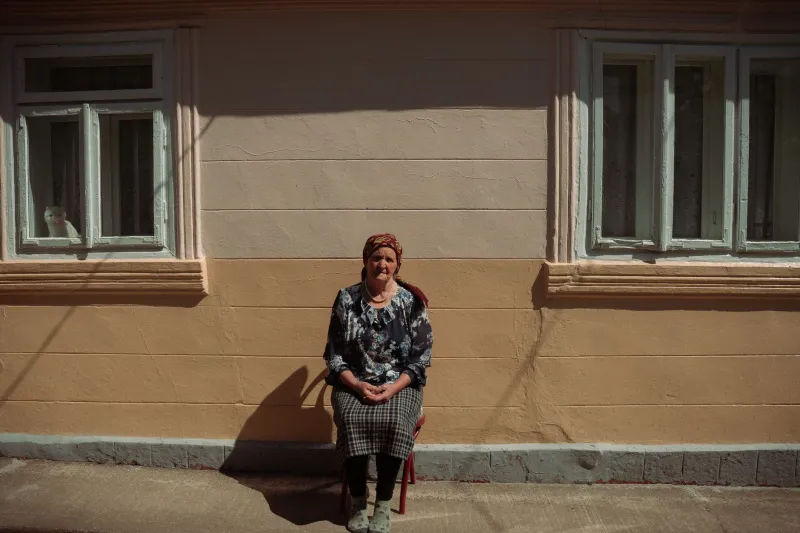
The easiest thing would be to just call them witches and move on. But that framing does a real disservice to what these women actually were. In rural Romanian communities — particularly those tucked into the Carpathian foothills of Moldavia, Oltenia, and Transylvania — the descântătoare occupied a role that was equal parts herbalist, spiritual counselor, midwife, and community memory keeper.
They performed descântece: spoken-word healing rituals that combined medicinal plant knowledge with incantations passed down through strictly oral traditions. Sick child? There was a descântec for that. Broken heart? Absolutely. Livestock acting strange? You went to her before you went to the priest — and sometimes instead of the priest, which is where things got complicated.
These weren't fringe figures. They were embedded in the social fabric of village life. Neighbors consulted them, respected them, and yes — occasionally feared them. That fear was part of their power, and many of them cultivated it deliberately.
The Church Wasn't a Fan
Here's where the history gets thorny. The Orthodox Church, which held enormous sway over Romanian peasant communities for centuries, had a deeply conflicted relationship with folk healing traditions. On one hand, many descântece were explicitly Christian in their language — invoking the Virgin Mary, various saints, and the Holy Trinity alongside older, pre-Christian imagery. The women weren't operating outside the Church so much as they were running a parallel system that the Church couldn't fully control.
On the other hand, that parallel system was precisely the problem.
Church records from the 17th and 18th centuries document repeated attempts to suppress folk healing practices — sermons condemning them, parish priests instructed to discourage villagers from seeking out "cunning women," and occasional formal denunciations. But unlike the dramatic courtroom spectacles of Western Europe, Romanian suppression was more of a slow, grinding institutional pressure than a sudden purge. There were no mass trials. There was no Romanian Salem moment.
What there was instead was something arguably more insidious: a centuries-long campaign to reframe these women as either superstitious frauds or outright servants of evil — a narrative that stuck in popular culture long after the Church's direct influence faded.
Strigoi Hunters and the Grey Zone
One of the most fascinating subsets of the descântătoare tradition involves women who specialized in dealing with the strigoi — the undead figures at the root of vampire mythology that we've covered elsewhere on Haiducii. These specialists, sometimes called moroaice or simply "the knowing ones," were called in when a community believed a recently deceased person was returning to cause harm.
The rituals they performed were elaborate, physically demanding, and deeply dangerous in terms of social standing. If the suspected strigoi's family was powerful, accusing their dead relative of haunting the village could get you run out of town. If you were right — or at least if the community believed you were right — you became indispensable.
This is the grey zone that makes Romanian folk healing tradition so rich. These women weren't powerless victims waiting to be persecuted. Many of them were shrewd operators who understood exactly how much authority their knowledge gave them and used it accordingly.
What Survived and Why It Matters
Here's the remarkable part: a lot of this knowledge didn't die. It went underground, adapted, hid inside Christian ritual language, got passed from grandmother to granddaughter in whispered conversations that nobody wrote down — and it survived.
Ethnographers and folklorists, particularly in the post-communist period when Romanian scholars gained more freedom to study their own cultural heritage without ideological filters, have been documenting surviving descântece traditions since the 1990s. Researchers like Romulus Vulcănescu laid early groundwork, and a newer generation of academics — including a growing number of women scholars who bring a pointed feminist lens to the material — have been reframing the entire tradition.
The argument they're making is compelling: the descântătoare weren't primitive holdovers from a superstitious past. They were sophisticated knowledge custodians operating in conditions of extreme institutional hostility. The fact that their systems survived at all is a testament to how deeply communities actually valued what they offered.
And in the United States, where interest in herbalism, folk medicine, and pre-industrial healing traditions has exploded over the past decade, the Romanian version of this story is starting to find an audience. Romanian-American diaspora communities — particularly in cities like Chicago, Cleveland, and Detroit with large Romanian populations — have seen renewed interest in these traditions among younger generations looking to reconnect with heritage that communism tried to sever and assimilation tried to finish off.
The Legacy Is Messier Than a Hashtag
It would be tempting to wrap this up with a clean empowerment narrative — wise women, suppressed knowledge, reclaimed power. And there's truth in that framing. But it's worth sitting with the messiness too.
Some descântătoare absolutely exploited vulnerable people. Some of the "healings" they performed caused real harm. The tradition existed inside a patriarchal society that simultaneously venerated and controlled women, and the descântătoare worked within those constraints rather than dismantling them. Calling them proto-feminists is probably a stretch.
What they were, more accurately, was pragmatic. They found the margins where power was available to them, and they operated there with skill. In a world that offered women almost no formal authority, that's not nothing. That's actually quite a lot.
The Carpathians have always been good at producing people who survive by finding the cracks in official systems and building something durable inside them. The outlaws we've written about on this site did it with swords and mountain passes. The descântătoare did it with yarrow root and spoken words passed down in the dark.
Different tools. Same mountains. Same stubborn refusal to disappear.