Forget Plastic Skeletons — Here Are 7 Carpathian Superstitions That Invented Spooky Season
Every October, Americans go absolutely feral for Halloween. Pumpkins appear on every stoop, Spirit Halloween colonizes another abandoned Bed Bath & Beyond, and everyone suddenly develops strong opinions about the correct ratio of Reese's to Snickers in a candy bowl. It's a whole thing, and honestly, it's great.
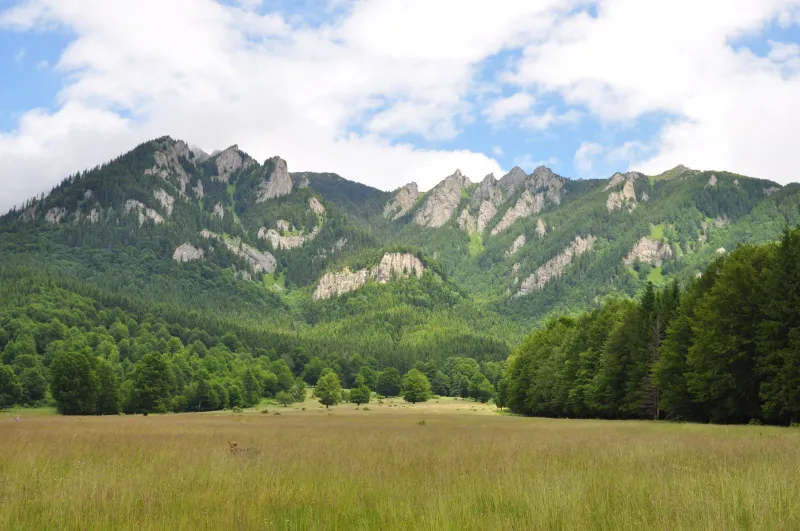
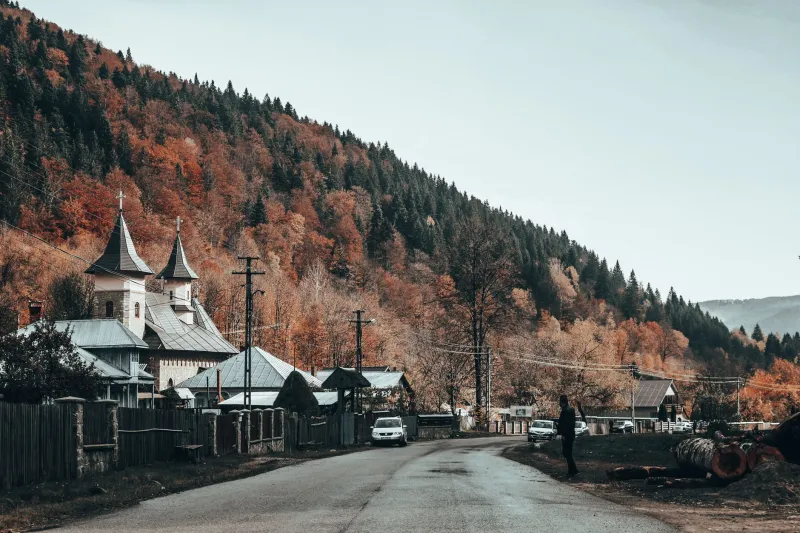
But here's what most people don't know: the Carpathian Mountains of Romania have been doing "spooky" since before the Roman Empire showed up and tried to civilize the place. The folk beliefs that emerged from those forests and valleys aren't just creepy — they're complex, deeply human, and occasionally so strange they'll make your seasonal Spirit purchase feel embarrassingly tame.
Let's take a walk through seven of the best.
1. The Strigoi Is Not Your Grandma's Vampire
The American version: A pale, elegant creature in a cape who can't handle garlic or sunlight and has complicated feelings about a teenage girl in the Pacific Northwest.
The Carpathian reality: The strigoi is something far more unsettling, and it comes in two flavors. A strigoi viu is a living person — usually someone born with a caul, or with a tail, or as the seventh child of a seventh child — who is believed to have the power to send their soul out at night to feed on the life force of neighbors and livestock. They don't even know they're doing it. They wake up tired, their victims waste away, and no one can quite figure out why.
The strigoi mort is the undead version — a corpse that refuses to stay put. Not because it's evil, necessarily, but because something is unfinished. Maybe the person died without receiving last rites. Maybe a cat jumped over the coffin before burial (a serious no-no in Romanian tradition). Maybe they just had unresolved business with the living.
The solution? Dig them up and check the body. If it looks suspiciously fresh and ruddy, you've got a strigoi. Drive a stake through the heart, cut off the head, or fill the mouth with garlic. Romanian villagers were doing this centuries before Bram Stoker showed up and repackaged the whole thing for Victorian England.
2. The Night Between Years Is More Dangerous Than Any Single Holiday
The American version: New Year's Eve is for champagne and optimism.
The Carpathian reality: The period between Christmas and Epiphany (January 6th) — called Între Ani or "between the years" — is considered one of the most spiritually volatile times on the calendar. The boundary between the living and the dead grows thin. Spirits wander. Unmarried girls can divine their future husbands through elaborate rituals involving melted lead, mirrors, and hemp seeds thrown over the shoulder at midnight.
More ominously, this is when the colindători — ritual carolers — must be welcomed properly, because turning them away brings bad luck. The caroling tradition isn't just festive; it's protective. The songs themselves are believed to hold power, driving off malevolent forces and blessing the household for the year ahead. Miss a carol group and you might just be inviting something worse to fill the space they left behind.
3. Your Shirt Might Be Haunted (Intentionally)
The American version: A Halloween costume is something you buy in a bag from Target.
The Carpathian reality: Traditional Romanian embroidery — the intricate geometric patterns on ie blouses and folk dress — isn't just decorative. Many of those motifs are protective symbols, encoded with meaning by the women who stitched them. Certain patterns were believed to ward off the evil eye (deochi), deflect curses, or bring fertility and good fortune.
The ie blouse, in particular, has a spiritual dimension that most Western observers completely miss. A girl's first blouse was often made by her mother or grandmother using specific protective stitching. Wearing it wasn't just cultural expression — it was armor. The belief that cloth could carry intention, protection, or even a curse is ancient and widespread across the Carpathian region, and it's one of the reasons Romanian folk dress is so elaborately made. Function and protection were the same thing.
4. Don't Whistle Indoors (Seriously, Just Don't)
The American version: Whistling is something you do when you're happy or trying to seem casual in a movie scene.
The Carpathian reality: In Romanian folk belief, whistling inside the house is a reliable way to invite the devil in, summon bad luck, or drive away household spirits that protect the family. The cămin — the hearth — was considered sacred, a dwelling place for protective ancestral spirits. Disrupting the spiritual atmosphere of the home through careless noise, especially whistling, was genuinely believed to have consequences.
This one isn't just Romanian — variants of the indoor-whistling taboo appear across Slavic and Balkan cultures — but in the Carpathian context it connects to a broader belief that the home is a spiritually charged space requiring constant maintenance. Leave the door open too long on certain nights? Bad. Sweep after dark? Worse. Whistle at the hearth? Don't even.
5. The Moroi: When a Dead Baby Becomes a Poltergeist
The American version: The scariest thing about a baby in a horror movie is the Annabelle doll nearby.
The Carpathian reality: The moroi is a category of restless spirit that, in some regional traditions, specifically refers to the ghost of an unbaptized child. In a pre-modern world where infant mortality was devastating and baptism was considered spiritually urgent, a baby who died before the rite was performed was believed to exist in a liminal state — neither fully in the world of the living nor peacefully at rest.
These spirits were thought to cause nightmares, smother sleeping people, and generally make themselves known in unsettling ways. The remedy was often ritual — prayers, specific burial practices, or the involvement of a priest. The moroi tradition reflects genuine historical grief, encoded in supernatural language. It's heartbreaking and eerie in equal measure, which is more or less the signature of Carpathian folklore.
6. Red Thread Is Basically a Spiritual Seatbelt
The American version: A red string bracelet is something you buy at a festival and forget to take off.
The Carpathian reality: Red thread and cord appear constantly in Romanian protective magic, tied around the wrists of infants, woven into cradles, hung at doorways, and attached to livestock. The color red has deep apotropaic significance across the region — it repels the evil eye, wards off malicious spirits, and marks something as claimed and protected.
New mothers were particularly careful about this. A baby without a red thread was considered dangerously exposed in the days after birth, when both mother and child were believed to be vulnerable to supernatural interference. Midwives knew the protocols. Grandmothers enforced them. The thread wasn't a fashion statement — it was the difference between a protected household and an open invitation.
7. The Forest Is Alive, and It's Not Necessarily on Your Side
The American version: The scary forest is a setting. It's where the monster lives.
The Carpathian reality: In Romanian folk cosmology, the forest is not a backdrop — it's an entity. The Muma Pădurii (Mother of the Forest) is a figure who appears across regional folklore as an ancient, malevolent hag who lures children into the woods, causes travelers to lose their way, and generally embodies the forest's indifference to human survival.
But it's more nuanced than a simple villain. The forest in Carpathian tradition is a place of power, danger, and liminality — where outlaws like the haiduci found freedom, where healers gathered medicinal herbs, and where the rules of the human world simply didn't apply. Respecting the forest meant acknowledging that you were a guest in something older and stranger than yourself.
When Romanian peasants told their kids not to wander into the woods after dark, they weren't being metaphorical. They genuinely believed something was out there, watching.
So the next time you're carving a pumpkin and watching Hocus Pocus for the fourteenth time, maybe pour one out for the Carpathians — the mountain people who've been navigating genuine supernatural dread since before your Halloween traditions had a name. They didn't need a holiday to take the spirit world seriously. For them, it was just Tuesday.